Quantcast
Latest Stories
Home » byline

Art installations inaugurate art space at controversial Acuzar ‘heritage resort’ in Bataan

By
Casa Hidalgo, the original home of Escuela de Bellas Artes

A select group of artists, collectors and friends assembled to hear a few words from Jaime C. Laya. The occasion was the opening of the show of three installation works by Geraldine Javier, Renato Habulan and Alfredo Esquillo Jr.

Posted: May 27th, 2013 in Arts and Books,Editor's Pick,Featured Gallery,Headlines,Photos & Videos | Read More »

Butch Campos, Doris Ho, other trustees unveil new Met

By
campos

On a property across the Philippine Navy headquarters on Roxas Boulevard, the Marcos regime built what was intended to be a military museum. The building was designed by the late architect Gabriel Formoso to blend with the now nearly forgotten historic Fort San Antonio Abad, hidden in the shadows of the taller structures of the BSP complex.

Posted: February 1st, 2013 in Fashion and Beauty,Featured Gallery,Headlines | Read More »

From ‘despensera’ to ‘No. 2’: A history of mistresses in the Philippines

By

Many of our perceptions and attitudes today about mistresses have deep roots in tradition and history.

Writing around 1604, the Jesuit Pedro Chirino observed, “…I suspect that the alliances formed by (Visayans) are not marriages, but rather the taking of concubines, considering the readiness with which they divorce and marry again, according to the custom of the country…”

The Spanish official Antonio de Morga, in his “Sucesos de las Islas Filipinas” (1609) and republished by Rizal with commentary, also observed that Filipino “…marriages were annulled and dissolved for slight cause,” upon the examination and judgement of the relatives of both parties, and of the elders.

But Morga points out that generally, Filipinos “…considered one woman whom they married, as the legitimate wife and the mistress of the house.” She was called the asawa (consort).

“Those whom they kept besides her they considered as friends. The children of the first were regarded as legitimate and whole heirs of their parents; the children of the others were not so regarded, and were left something by assignment, but they did not inherit.”

Fray Andres de San Nicolas, writing in 1664 of Cuyunon (of Palawan) and Kalaghans (of Surigao del Sur), noted that traditionally, “they had as many concubines as they could support.” That is, the first or legitimate wife headed the house, supervising the other women in household chores and productive enterprises (such as weaving). Polygamy was a way of expanding the alpha male’s labor force.

Spanish contact challenged the existing norms of gender relations. San Nicolas cited the case of Ynuc, the chief of Tandag (Surigao del Sur), who had 2,000 slaves. He was talked by the Recollect missionary into “sending all the concubines from his house, and marrying the first wife (in Christian rites, and thus bound by Spanish laws)…” aside from freeing all his slaves.

By no means was the moral campaign waged only on the natives. In his report to the Spanish king in 1577, Gov. Francisco de Sande reported how he was trying to improve the moral standing of his soldiers, outlining his measures against gambling, stealing, drinking, fighting and other forms of corruption, including concubinage. “It is desirable that the soldiers should always lead honest lives; but as they are young, and the women in this country are so many and so bad, it is more difficult to correct this evil…”

A colonial official, Hernando de los Rios Coronel, writing in 1620, reporting on the Manila-Acapulco galleons, noted that passengers and sailors took with them slave women who were their concubines (some of whom were sold, at great profit, in Mexico). De los Rios cited the case of “a certain prominent official who carried with him 15 of these women and some were delivered of children by him, while others were pregnant, which made a great scandal.”

In fact, in Europe, the Office of the Holy Inquisition was instituted to root out heresy (including witchcraft), but by the time Philip II had it established in Mexico (and by extension the Philippines) in 1570, its mission had become very different.

Bigamy

A document dated March 1, 1583, giving instructions for the resident commissioner of the Office of the Holy Inquisition in Manila, noted that the Inquisitor is “…expected to investigate various crimes, especially that of bigamy…” (among the Europeans in the colonies). The crime was proven by presenting evidence on the existence of the first wife at the time of the second marriage.

There were different rules for Chinese immigrants to the Philippines. There were strict limitations on the entry of Chinese women throughout most of the Spanish regime. Instead, they encouraged the conversion of Chinese men to Catholicism, and their marriage to Christian natives, despite already having wives in the mainland.

Their full-blooded sons would someday be permitted to migrate to the Philippines, to join their half-siblings by their Filipina stepmothers.

After their tours of duty in the colony, Spanish government officials usually left behind their Filipina wives or mistresses and half-caste children.

Many of the Caucasians who stayed till the day they died were members of the clergy. Writing in 1852, Sinibaldo de Mas pointed out “…one cannot exaggerate the harm that a goodly portion of the friars are doing, and the moral force that our government is losing because of the manner in which they are living. The most general weakness is that of concubinage. Many keep a mistress (called a stewardess or despensera), inside or outside the convent.”

But “…a fault 10 times more harmful than (adultery) is that of avarice, fed by the practice of trading. It is well-known that the mode of trading (in the Philippines) usually consists in usury, that is, in advancing money in order later to receive products in kind at a very low price…the minister, as soon as he becomes a speculator, thinks little or nothing of the means so long as they conduce to the increase of his capital.

“Sometimes, this vice is united with the first, and the stewardess or her husband—who is generally one of the servants of the convent, whom the friar has married to her, in order to save appearances—is in charge of gathering inventory, storehouses, shops, sales, etc.”

A specific case he mentioned was of a parish priest in Ilocos Norte, who controlled the indigo trade in his area over the years. The friar “boasted that he intended to take his P40,000” (equivalent to P60 million in buying power today) “…and enjoy life with a female companion…” It is therefore no wonder that some old fortunes in the country were founded on the wealth established by friar ancestors.

The above historical background is the setting for today’s perceptions and attitudes toward mistresses in the Philippines. Linguistic analysis also provides us with some clues on this social phenomenon.

‘Illicit caress’

Classical Tagalog terms for mistress or concubine are kalunya and kaagulo. The former is from the root word alunya, or “illicit caress.” Ka+alunya is someone you share illicit caresses with. There is also kaapid, and pakikiapid (“fornication”) from apid: “illicit coitus.”

In Bikol, mistresses are called kasaroan or sambay; in Ilokano, kamalala; in Kapampangan, sesay or lugud; in Maranao, sandil; in Cebuano, puyupuyo. In many other Philippine languages, “the other woman” is simply called babae, babaye, bii.

In Filipino-Spanish, the term usually used to refer to mistresses is querida (or kerida) derived from querer, which suggests that they are objects of love, affection, liking, fondness, desire. (A young girl is a chica, which became today’s slang “chicks”).

There are also the terms kulasisi and patiki, which are of colonial vintage. The first term is easily explainable: it refers to the small green parrot or parakeet, which became fashionable to keep in cages in the late 19th century; mistresses were compared to kept birds. Patiki is naughtier: it may refer to a sexual act where the female mimics the “bird (like kingfisher) that feeds on fish.”

Mistresses were young, pretty and more adept in pleasures of the flesh. But wives had to have unimpeachable morality, pedigree, education and property—qualifications which Josephine Bracken lacked.

Thus, Rizal’s mother and most of his siblings snubbed the half-caste from Hong Kong, who came to Dapitan as companion to a much older man she was not related to. She attempted to inherit from his estate, laying claim to Rizal’s library in Hong Kong which she could have liquidated quicker than any share in property due him.

Nevertheless, following Filipino custom, the Rizal family rebuffed her, despite Spanish claims that he married Bracken shortly before he was executed.

The 20th century saw the unabated practice of concubinage in Philippine society. In fact, under the rule of the more secular Americans, morals were viewed more liberally. American Caesars such as Gen. Douglas MacArthur was besotted with a stage actress, and Gov.Gen. Frank Murphy was linked to a socialite who wielded her influence well into the 1960s.

Adultery and concubinage increasingly became a function of power and in fact, to a large extent, became more and more socially acceptable. It is no secret that more Philippine presidents broke their vows of monogamy than kept them, and infidelity certainly did not affect—in fact, may have enhanced—voting numbers.

There are stories, such as those told by Jorge Vargas and Carlos Quirino, of their walking inadvertently into scenes of engagement in affairs other than of the state that would have embarrassed others, but which left Manuel L. Quezon unflustered. A successor not only played around but kept another family, giving his name to a son, and establishing a lineage that begat a beauty queen.

Another was said to have conducted an affair with a lady politician belonging to a wealthy clan, whose husband subsequently couldn’t take it anymore. And of course there was Marcos, who was longest in power.

There is the urban legend that he has a namesake by a stunningly beautiful woman he did not marry; there is the much-publicized tape where he purportedly serenades an American movie starlet with “Pamulinawen.”

A paramour with whom a high official was rumored to have had a son sponsored high-profile cultural events, some say in an attempt to gain attention, because the man publicly honored his official wife.

Elective officials, the country’s richest men and captains of industry, military officers, bureaucrats high and low, entertainment moguls, movie idols, media personalities, sportsmen and yes, men of the cloth, continued to wield privilege, influence and financial means to attract women. Having many women—in succession or concurrently—became a necessary aspect of success.

Five families

The late movie personality Lou Salvador is said to have had 110 known children; another actor/politician, still very much alive, ranks second, with around 40. One vice president is said to have had more than five families, whose houses were designed exactly alike, so that he would not get lost, whichever wife he decided to go home to.

An aged taipan has at least eight families: his youngest child is studying in a posh private school. He is attempting to already distribute his riches, because the partition of his humongous estate would be a nightmare.

From the late 20th century, mistresses have been kept not only as sexual playmates (parausan or stress relievers), but often as partners in all aspects. A slang term of 1970s vintage, still in use today, is “kabit” or “something attached.” It originally referred to a public transport vehicle such as a bus or jeepney, operating illicitly on an existing franchise already in use. Another term is “Number 2.”

These terms highlight mistresses’ fiduciary and intermediatory functions. As despensera, she holds the keys to the man’s locked doors, and in many cases helps shape decisions. If the man chooses well, mistresses do not merely help him spend his money; they can help him make more of it.

A mistress in the 21st century might aspire to be more than someone able to do the “helikopter” (or perform limber sex acts). More than “in-apartment” (or now, “ikinondo”), she can expect more from her papa (benefactor) than subsidized housing and a household allowance.

Under the Family Code that President Cory Aquino signed into law, even her illegitimate children are due half a share from their father’s estate, from which she would therefore benefit, though indirectly. If he were to become a widower, if she could be patient and establish a common-law, exclusive live-in or “life partner” relationship with him, she may claim from his estate nearly as much as may a legal wife.

Perhaps the most successful model is that of a former high official’s wives and children, who held or continue to hold various local and national elective positions, constituting a multilineal political dynasty and multifamilial business conglomerate, perhaps possible only in the Philippines.

Gradually, though, over the past decade or so, there have been cases of women reversing their previously submissive roles. They have been the ones gaining control of relationships, using wealth and power to attain what they want, making men move to their music.

In the past, the men were only dance instructors. Some, though, were high officials of the land—but that is another story.

Posted: March 25th, 2012 in Columns,Featured Columns,Headlines,Sunday Lifestyle | Read More »

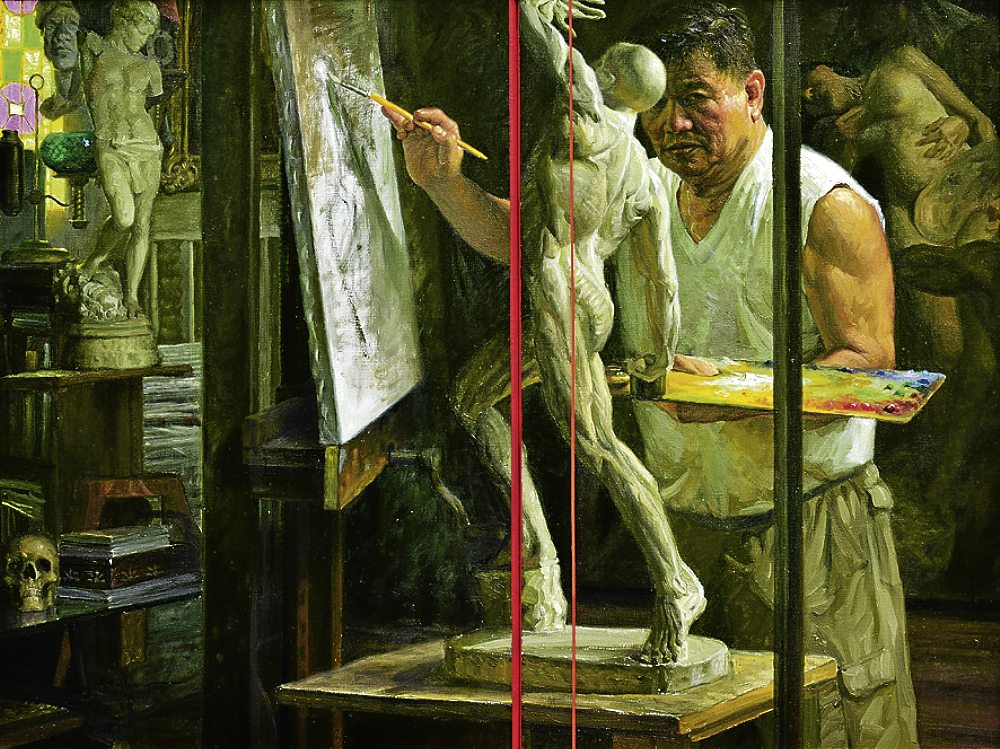
An eye for the ‘I’: Stunning show of self-portraits from Paulino Que collection

By
ROMULOGalicano

A stunning selection of a hundred self-portraits by Filipino artists, titled “Imagining Identity,” will be on view this month.

Posted: February 5th, 2012 in Arts and Books,Headlines | Read More »

How to bank on art amid uncertainty

By

It’s hard to plan for one’s financial future these days. Interest rates for ordinary savings and time deposits are so low. Earnings from sovereign bonds—unless you have a gadzillion pesos—are not that much. The stock market is up today, down tomorrow, driven by momentum rather than fundamentals. Nowadays, affordable residential land is outside the city. [...]

Posted: August 22nd, 2011 in Arts and Books,Editor's Pick,Headlines | Read More »

Advertisement
  1. An expat’s ‘wife-trepreneur’s’ bright idea is fast catching on
  2. 1335 A. Mabini St.–from colonial mansion to contemporary landmark
  3. With crummy airport and mercenary taxi drivers, it’s not fun in the Philippines
  4. What Aga Muhlach, Anne Curtis, Iza Calzado are trying out these days
  5. World’s youngest-looking 54-year-old is still a favorite among young girls today
  6. Dan Brown’s ‘Inferno’ No. 1 on Apple’s iBookstore
  7. A Super date with 2PM’s Nichkhun
  8. Miss USA contestant latest beauty queen to botch answer
  9. Married woman is this close to having an affair with another married man
  10. The mistress is now the wife
  1. World’s youngest-looking 54-year-old is still a favorite among young girls today
  2. What Aga Muhlach, Anne Curtis, Iza Calzado are trying out these days
  3. The mistress is now the wife
  4. Miss USA contestant latest beauty queen to botch answer
  5. Every dad raises his son differently, and it’s not always rosy
  6. Dubai inaugurates world’s tallest ‘twisted’ tower
  7. DC Comics superhero is from the Philippines
  8. Married woman is this close to having an affair with another married man
  9. Maggie Wilson-Consunji
  10. Murdoch files for divorce, marriage ‘irretrievably broken’—spokesman
  1. Interview with the vampires
  2. Tonyboy and Gretchen’s Dominique gets her closeup
  3. World’s youngest-looking 54-year-old is still a favorite among young girls today
  4. Guess what Sarah Jessica Parker brought home to NY as ‘pasalubong’ from PH?
  5. Richest Filipino is also biggest philanthropist
  6. Call center workers told to have more ‘sex’ in their lives
  7. Amazed at illicit relationships among OFWs
  8. She’s marrying her mother’s ex-boyfriend
  9. Oops! Miss Universe Canada crowns wrong winner
  10. How juicing saved his life

News

  • Politicians allowed estero settlers, says Singson
  • P600-B flood control master plan in old bill
  • DOH warns of deadly diseases in floodwaters
  • Brillantes: Go ahead, impeach me
  • Tropical Strom ‘Emong’ out of PH, but rains to persist
  • Sports

  • Co fulfills coaching dream with Cardinals
  • Archers Yap, Chipeco still on target, bag 2 golds
  • Avena paces PH Senior by 2
  • Paras leads 9 PBA Hall of Fame nominees
  • SEA Games: PH fielding no more than 200 bets
  • Lifestyle

  • This pizza is found only in Canada–and now in PH
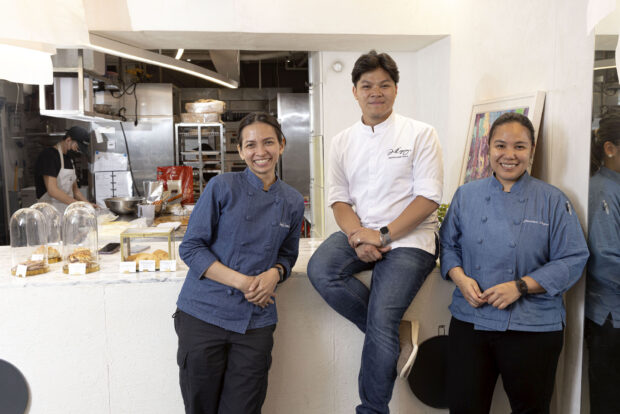
  • Filipino chef making waves in Singapore–for Japanese food
  • Roasted vegetables on toast
  • Gluten-free cupcakes and cakes–who says they don’t taste great?
  • Nostalgic Grace Park and a haven of seafood
  • Entertainment

  • Genre-busting “The Kitchen Musical” now on Myx TV menu
  • Rizal concept album still rocking, rolling along
  • Zsa Zsa Padilla still singing sad songs
  • Marvin Agustin on his love for cooking
  • Postscript to Cannes
  • Business

  • Aquino: Growth must be inclusive
  • DOTC set to seal Terminal 3 deal
  • ALI eyes offering of P21B in long-term retail bonds
  • Illegal cigarette trade seen to cost gov’t P8B a year
  • BOP surplus down to $75M in May
  • Technology

  • Internet balloons to benefit small business—Google
  • Dating site for broody singles launches in Denmark
  • Facebook CEO meets SKorean president
  • Chinese supercomputer named as world’s fastest
  • Echoes can reveal the shape of a room
  • Opinion

  • Mending nets
  • The Great Flood
  • What’s in a name?
  • CComedia’s statement on the cruel rape joke
  • It’s way past time for action
  • Global Nation

  • Exploited Filipinos in US 7-11 stores OK, execs say
  • Experts plug changing PH investment climate in confab
  • Marines reinforce disputed shoal
  • Senators seek probe of scandal
  • CBCP lauds probe on OFWs’ sexual abuse, says problem not only in Mideast
  • Marketplace
    © Copyright 1997-2013 INQUIRER.net | All Rights Reserved
    Acqua Skin Ad
    Acqua Skin Ad