For generations and across cultures, death has been understood not as an end but as a bridge to a new beginning—a journey upon a seafaring vessel, carrying souls toward the afterlife. This perspective was shared by Filipino visual artist and educator Roberto “Bob” Feleo, whose poetic and spiritual understanding of mortality is intricately woven into four decades of work.
Feleo embraced the boat as both form and symbol in his sculptures, evoking the anonymous boatman of the Manunggul Jar, the Valkyries of Norse mythology, and Greek mythology’s Charon—psychopomps guiding souls across the threshold of the physical world.
A voyage of his life
Perhaps the Filipino word “paglalayag” (voyaging) best captures this journey, one that Feleo himself embarked upon just days after his 71st birthday.
University of the Philippines College of Fine Arts assistant professor Lisa Ito-Tapang, in the official tribute statement released by the UPCFA, traces the genesis of Feleo’s journey.
His path as an artist, Ito-Tapang notes, began with “early exposure to the works of folk artists and artisans (Contreras-Koterbay 2006) and his first years as a history undergraduate at the University of the Philippines. By 1978, he was already joining group exhibitions, before shifting to the Philippine Women’s University, where he completed a Bachelor of Fine Arts in Painting in 1982.”

Ito-Tapang continues, “As a visual artist, Feleo looked further beyond the Western-oriented academic traditions of both schools and found inspiration in the country’s layered history of cultural symbols: from pre-Hispanic mythology to Catholic folk religious icons, pop, and historical figures. From these, he produced his Sapin-Sapin mixed media series across the waning years of Martial Law and later won the Grand Prize of the inaugural Metrobank Painting Competition in 1984.”
It was perhaps Feleo’s grounding in Philippine history and his passion for the power of myth that fueled the distinctive visual language of his studio practice.
It was perhaps Feleo’s grounding in Philippine history and his passion for the power of myth that fueled the distinctive visual language of his studio practice.
Drawing on indigenous cosmologies, folk spirituality, pivotal historical moments, and pop culture, he created works that moved fluidly between mythos—the collective stories and beliefs of a culture—and metanarrative, crafting a contemporary mythological universe that articulated his evolving understanding of what it means to be Filipino but also what it means to be human.

Gone, but not forgotten
Feleo’s greatest legacy, however, lies in the enduring and indelible impact he left as an art educator, both within and beyond the walls of the Philippine High School for the Arts, UPCFA, and the Philippine Women’s University. There, he not only nurtured in his students a sensibility and intuition for a distinctly Filipino way of seeing, rooted in collective memory, but also embodied a way of living—“placidly amid the noise and haste, while remembering what peace there may be in silence,” as inspired by one of his favorite poems, Max Ehrmann’s “Desiderata.”
Feleo was quintessentially a man of few words—words that instruct, edify, reframe, and redirect. His presence carried gravitas, and his conversations held transformative power.

Beyond his accomplishments—works exhibited in institutions such as the Fukuoka Asian Art Museum in Japan, recognition such as the Cultural Center of the Philippines’ Thirteen Artists Award, fellowships like the one at the Virginia Center for Creative Arts in the United States, and iconic illustrations including those in The Soul Book—Feleo, in his passing, demonstrated that most enduring memory of him would be his role as a human being who was present when it mattered the most.
A tribute from friends and loved ones
These tributes of collective remembrance for Feleo are from some of today’s most influential artists and thinkers, individuals whose lives he touched in one way or another. For the artist, thinker, and art educator who dared to create a contemporary visual canon for indigenous myths and obscure histories. For the stories that might otherwise have been encountered only through oral tradition or the written word.
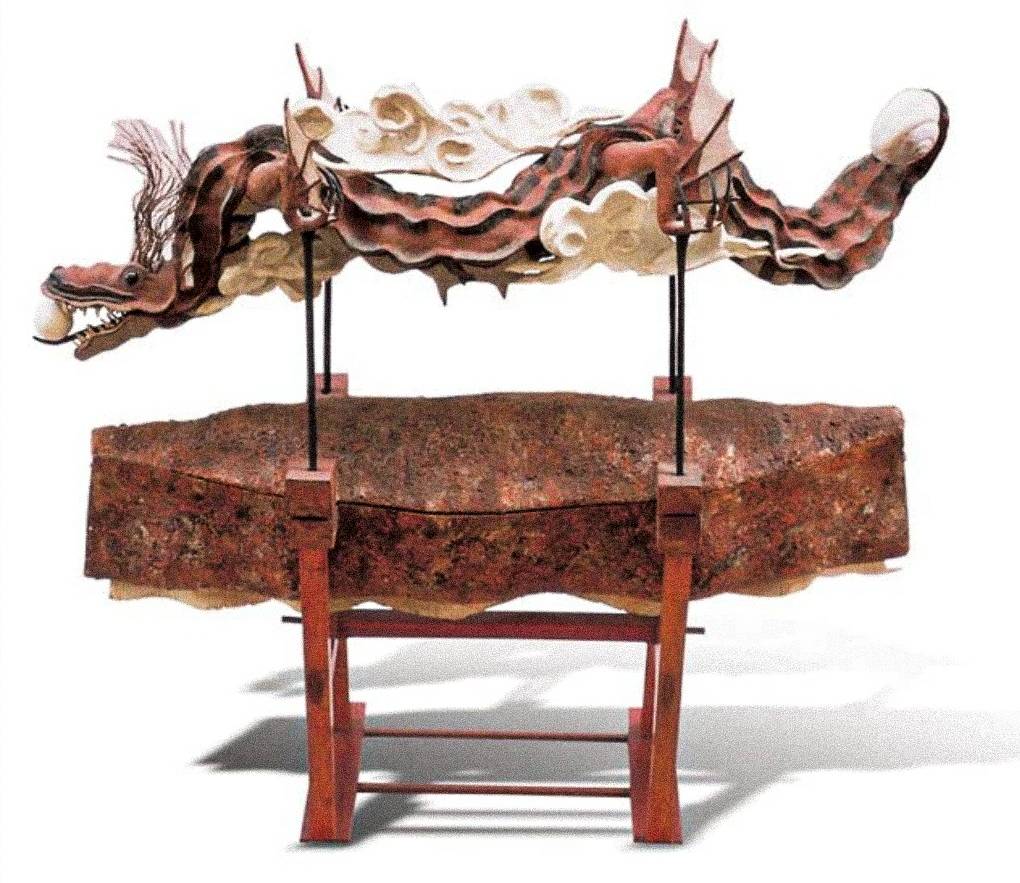
“One of our finest artists, a maker in both the classical and contemporary conception. His saintly devotion to craft and form is layered with a keen critique of the world’s wicked ways as well as the inspiration of a lasting cultural memory. Mentor, lodestar, [and] keeper of faith in the Philippine intuition.”
– Patrick Flores, art curator and critic
“Dear Bob,
I heard you left us in your typical high spirits, even excited to do a few more works—despite your worsening condition—for an upcoming show to coincide with the launch of your book next month. This is you, Bob, tirelessly wanting to create and share, even to your last breath—a never-ending legacy of excellent works that embody your thorough understanding of the entire spectrum of Philippine culture.
Truly, Philippine art has not seen from one person a plethora of images that together capture the soul and essence of the Filipino, distilled from multiple layers of histories built from encounters and contacts with other cultures. Maraming salamat, Bob!”
– Ma. Corazon A. Hila, author and professor at the UP College of Fine Arts Department of Theory
“As his co-faculty member when I was still teaching, I observed that Sir Bob lived his life as he taught art—with an integrity that shaped not only his work but also the hearts of those he mentored. From Sir Bob, I learned that creativity is inseparable from honesty, discipline, and perseverance. His legacy lies not only in the art he made but also in the marks he left through his example for other artists and his students alike.”
– José Santos III, visual artist

“During my first year of teaching materials classes at the UP College of Fine Arts back in 1997, I was nervous not because of teaching, but because the other section was handled by Sir Bob. And I knew how deeply respected and admired he was both as a teacher and as an artist. Even though I had never been his student, he welcomed me with kindness, shared his syllabus, and guided me without making me feel like a newcomer.
Looking back, I realize his commitment and dedication to teaching quietly inspired me and helped shape my own approach—teaching with the same generosity and commitment that he had shown me then.”
– Pam Yan Santos, visual artist
“While in conversation with Bob a long time ago, he commented about a work of another sculptor who was recycling old wood. He just casually said, ‘Sinasayang niya lang ’yung materiales.’ It is a line that we keep reminding ourselves of when creating a work of art and the innumerable possibilities of narratives materials can convey.
On another instance, in another conversation, we mentioned this artist who had been a bestseller, as a lot of collectors had been frantically buying his work, and he said, ‘Sino ba ’yung mga bumibili ng trabaho niya?’—another one-liner that makes us always think of the value of art and why we do what we do.
The last time we saw each other, he just casually said, ‘Masaya ako sa ginagawa ninyo.’ Bob is a man of few words, but has been an inspiration not only through his work, but also through his deeds. [We admire] him as a person, as a fellow student in fine arts (I was a freshman and he was in his final year), as a colleague in the academe (we’ve been teaching together in PHSA for more than a decade), and as a fellow artist (we have been in numerous exhibitions here and abroad).
I can say that mabibilang ko lang sa aking mga daliri ang iilan na alagad ng sining na totoo; isa dito si Roberto Feleo.”
– Alfredo Aquilizan, visual artist and art educator

“Sir Bob had an effortless coolness about him, and a presence that made us nervous in the best way. He joked around and told stories, and while some of his lessons felt puzzling back then, they’ve grown clearer with time, becoming part of how I see and practice art today. Even in silence, he challenged me quietly, and that brief time under his mentorship left an imprint I continue to carry in my art and in life.”
– Pope Bacay, visual artist
“I was lucky enough to have Sir Bob as my thesis advisor in high school. I learned so much from him about discipline in the studio, that you had to do something over and over and over again in order to understand the craft. Sir Bob was often quiet, but he had such a distinctive laugh and when we heard it, we knew we were onto something good.”
– Ryan Villamael, visual artist

“It is with great sadness that I say farewell to Bob Feleo, an artist whose vision and integrity contributed greatly to the landscape of Philippine visual arts. To have worked closely with him, to believe in the depth of his practice, and to help bring his work to audiences both here and abroad has been an extraordinary privilege. I am profoundly grateful for the time shared and deeply grieve the loss of such a remarkable and respected artist.”
– Cesar Jun Villalon, gallerist behind The Drawing Room
“Dear Sir Bob,
Salamat po sa lahat, sa mga payo, pakikinig at pagiging mabuting halimbawa. Sa UP noon, sabi-sabi strict ka! Strict nga pero mabait! Hindi ako makakagraduate on time noon kung hindi mo binigyan ng oras ang plate ko na late ko naipasa. Salamat, sir, sa iyo at sa family niyo po.”
– Tekla Tamoria, visual artist
“Sir Bob, isa ka sa mga nagturo sa akin ng kahalagahan ng integrity at ng doubt bilang artist—na kapag nawala ang doubt, nawawala rin ang growth. Sobrang grateful ako na ikaw ang naging thesis adviser at huli kong guro bago ako gumraduate sa UP. Maraming salamat, Sir Bob—dala ko habang-buhay ang mga tinuro mo.”
– Is Jumalon, visual artist
“Bob was one of the PHSA visual arts teachers when I was PHSA executive director. Everyone in the school, especially the young students and the younger members of the visual arts faculty, looked up to him and admired him as a teacher, a colleague, and a friend.
Maraming salamat, Bob, for the friendship, for your dedication to Philippine arts education, and for your exceptional, nurturing way of mentoring your students. You were, and will always be, an inspiration to young visual artists.”
– Fernando Josef, theater actor and former executive director of the Philippine High School for the Arts
READ: In his own words: Robert Redford on independence, integrity, and his enduring roles
“I remember in one of our classes, he told us that back when he was our age, art was such a male-dominated course and career. He said he felt very devastated for one of his female classmates who couldn’t become the artist she was meant to be because she was faced with the realities of motherhood—which were not bad things per se.
He told us how unfair it was because men could have children, make art, and have a career. And so, he told us he hoped that one day we wouldn’t sacrifice art-making because of established societal roles. He said: ‘Ang daming magagaling sa inyo, ‘wag sayangin.’
I thought it was so amazing for someone from his generation to acknowledge and share that with us. And I guess, in that sense, you could see his moral compass.”
– Ayka Go, visual artist

“Sir Bob was a visionary who taught us that art is not only an object, but a living force that shapes how we see the world. His generosity of spirit and fierce dedication to his students continue to ripple through generations of artists. He leaves behind not just works but an entire practice of courage, imagination, and love.
To me, Tito Bob was both mentor and compass—always reminding us to ground our art in truth and history. His humor, warmth, and unrelenting curiosity will forever guide how I teach and create. He was larger than life, and he will remain alive in all the stories, lessons, and works he has left us.”
– Samantha Feleo, visual artist and niece of Roberto “Bob” Feleo
“Sir Bob Feleo’s teachings were a perfect counterpoint to Roberto Chabet’s avant-garde leanings. Sir Feleo shared his vigor for making and nourished the sense of the folk within us. We will forever be his students, in awe of his mastery and devotion to his craft.”
– Alvin Zafra, visual artist
“Bob Feleo was a gentle spirit, deeply respected not only for his creative brilliance but also for his kindness, sense of humor, humility, and scholarly insight. He inspired generations of young artists with his thought-provoking approaches to art-making, his deep engagement with ideas, materials, and processes, and his methodical yet experimental approach that opened new paths of seeing and thinking.
As one of the most significant figures in Philippine art, his legacy lives on in his works, his students, and the many lives he touched with warmth and wisdom.”
– Benjamin “Benjie” Cabangis, visual artist and professor emeritus at the University of the Philippines College of Fine Arts
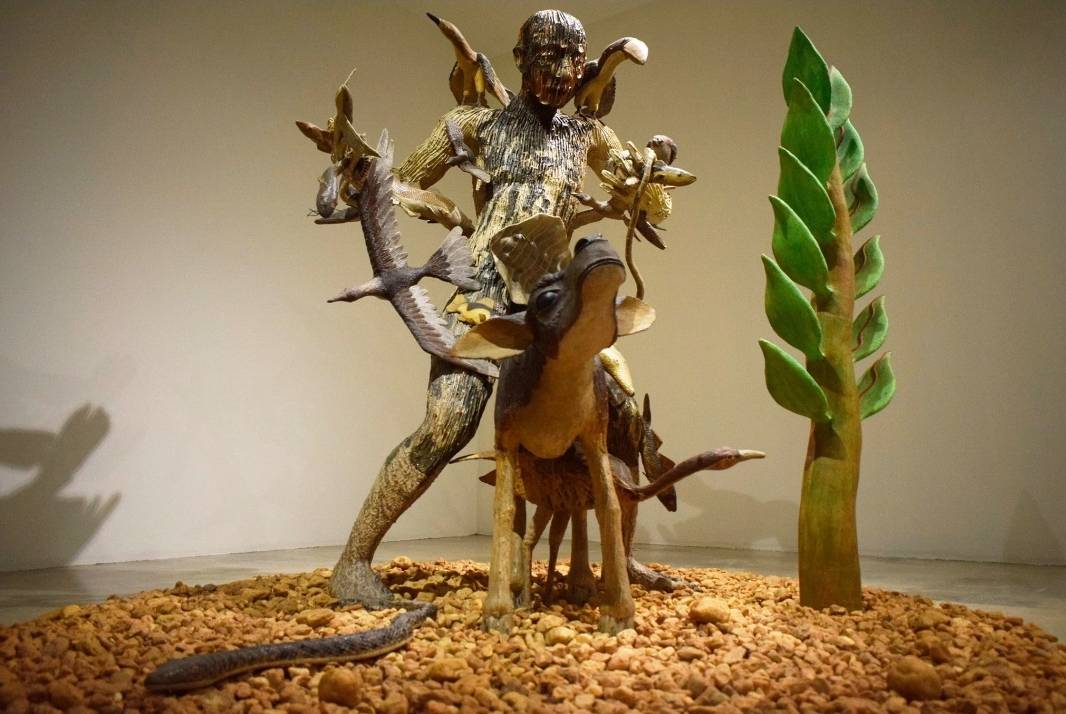
“Roberto Feleo, or Bob as I call him, is not only a remarkable artist but also a kind, helpful, and good-hearted human being. As an artist-teacher, he nurtures the soul and creativity of Filipinos, inspiring us to be our best in everything we do.”
– Elmer Borlongan, visual artist
“I pursued the path of education because of Sir Bob. He took us, his students, seriously. He did not only come to class with a lesson or an agenda; he listened to us, he engaged in conversation, and though he was a man of few words, his words of gravitas shaped me.
When my dad passed away during my undergraduate years in UPCFA, he handed me a handwritten letter as a way of ‘walking with me’ in my grief. He also gave my family a beautiful sculpture he made of a seafaring vessel, perhaps inspired by the Manunggul Jar, as a way of mourning with us in that time of grief.
Sir Bob will always be that to me. Though he was an artist of the highest caliber, he was, first and foremost, a good man—the best mentor one could ever have.
He ‘walked’ with us. He ‘walked’ with me. His greatest life’s work was the kind of person that he was. I will forever be grateful to Sir Bob Feleo.”
– Sarah de Veyra-Buyco, visual artist and program director for visual arts at Navitas Life and Learning
“Two days before my wedding in 1996, I went to pick up my good friends at the airport—Bobi Valenzuela and Bob Feleo. Back then, there were no tubes when passengers came out of the plane. Out came Bob, going down the plane’s stairs, carrying a dog sculpture—his wedding gift for us. Ann and I named the dog Bantay, and he sits proudly on our stairs, always watching over us 24/7.
Bantay will forever be in my home, just as my memories of Bob will forever remain in my heart. My good friend, my fellow Hiraya artist, my mentor.
Rest in peace, Bob.”
– Charlie Co, visual artist and co-founder of Orange Project

Roberto “Bob” Bulatao Feleo: Viewing details
Venue: Arlington Araneta
Date and Time: Tuesday, Sept 16 at 8:00 A.M.
Cremation and Mass (for closest family and friends only). After the cremation, the Feleo family will gently open the viewing of Roberto Feleo’s bangka to the public.
Public viewing: Wednesday, Sept. 17 to Sunday, Sept. 21
Public viewing of his bangka at Arlington, open 24/7