Bing Taojo’s fourth solo exhibition, “Brief Eternities,” focuses on one subject, equally ordinary as it is evocative: flowers. The exhibition ran at Galerie Joaquin from the 16th of June to the 28th, but its visual impact continues to linger.
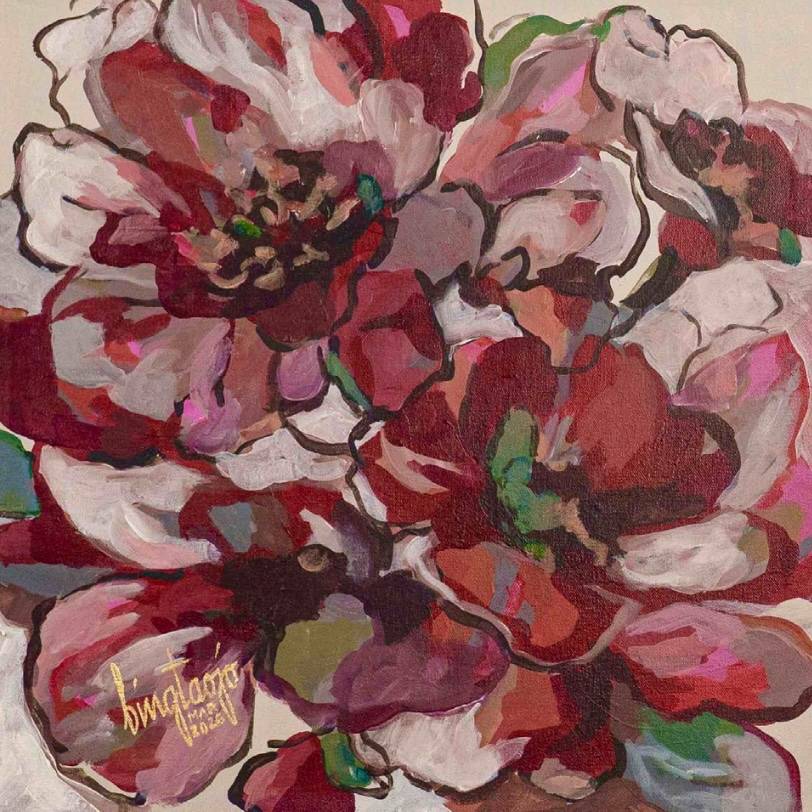
Each of the 25 paintings showcased at the exhibition lives in paradox: the permanence of her medium with the impermanence of her depiction. Each of these paintings is in its own phase in the floral cycle, from full bloom to slow whither. Taojo revels in all of it.
“If only more of us could recognize our own beauty as it goes from youth to age,” Taojo laments in the exhibition notes. But the brilliance in her work is in the impossibility of the task she urges her audience to heed—the task of appreciating what lies just before you, of allowing what must pass to pass.
READ: Over 50 local and global galleries mark MoCAF’s 2026 return
“If only more of us could recognize our own beauty as it goes from youth to age”
Storytelling through pigment
As one strolls through the paintings, color becomes identifiable as the primary mode of storytelling. Taojo does not refrain from vibrance, but does not cast aside dullness, either. In “Writings on the Heart I” and “Writings on the Heart II,” the canvases are swollen with red. In “A Thousand Thoughts I” and “A Thousand Thoughts II,” the canvases are shriveled in olive, mustard, hollowed pinks.
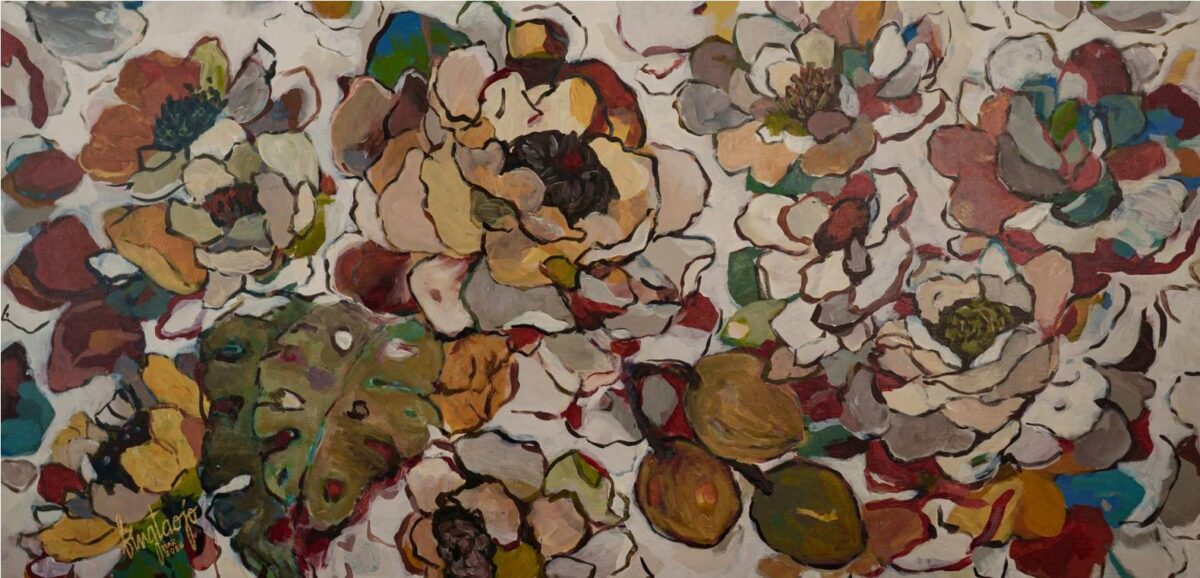
There is something nostalgic in the depiction of florals. The painting “In the Years to Forever” epitomizes the exhibition, as it encompasses grief and vitality in a singular canvas. Combining hues of cool blue and warm orange, the painting invites its audience to sit simultaneously with life and death. Of emergence and imminence.
The significance of flowers
In choosing to depict flowers, Taojo is calling upon a long artistic tradition, from Monet to O’Keeffe. And yet, somehow, she manages to make it her own. As striking as they are, one may find similar images spread across a dining table or else used as curtains in their Lola’s home.
READ: Feeling wistful for the whimsy of David Hockney
The image is that of a discarded memory, one dismissed as old or commonplace. Taojo refuses this act of dismissal, as if to gently suggest: Tread onward, but don’t be in such a hurry.