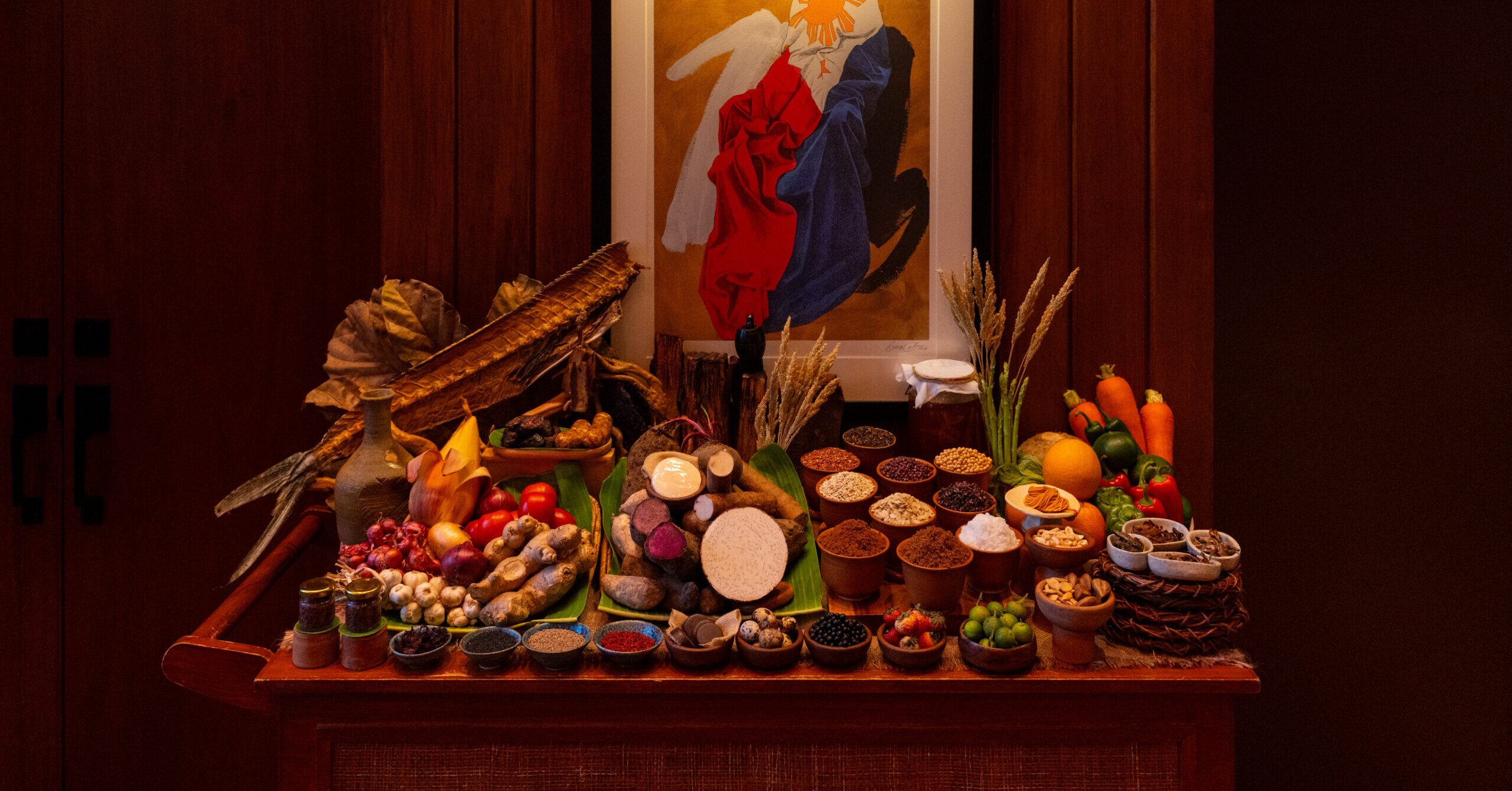
After immersing themselves in Western Visayas and Mindanao last year, Kevin Navoa, Thirdy Dolatre, and Erin Recto of Hapag venture into the mountains of Cordillera—the backdrop of the third sequel—in their attempt to travel across the Philippines, taste the local food culture, and translate the experience into a tasting menu.
After the critical acclaim of 2025’s one-two punch, the question on everyone’s minds is whether the new menu can scale the same heights they set for themselves—until they did, and quite convincingly, too, with the recent release of the Cordilleras menu.

Refusing to rest on their Michelin star, Hapag’s perspective of Cordillera remains peak, largely because of a desire to devour and double down on everything the region has to offer. Which may not be easy, as the area is often a point of inspiration for others, too.
“For me, the Cordilleras remain largely unknown and undiscovered,” says Navoa, chef and partner at Hapag. “It’s a place you need to experience firsthand to truly understand. You can read about it online, but being there is completely different.”
“For me, the Cordilleras remain largely unknown and undiscovered. It’s a place you need to experience firsthand to truly understand”
From the mountains to the capital
Moving fluidly through Ifugao, Mountain Province, Kalinga, and Baguio City, the team’s journey in early 2026 saw them looking inward and then looking out—at the people and places they met along the way who shared their food traditions—to form what is now the poignant eight-course Cordilleras menu.
The result can be best described as an intimate portrait of Cordillera in its most comforting version: grounded not just in smoking, fermentation, and preservation but also in variety, contrasts, and referentiality.

An intimate portrait of Cordillera in its most comforting version: grounded not just in smoking, fermentation, and preservation but also in variety, contrasts, and referentiality
Most of the dishes are evocative in nature, literally and metaphorically. They take cues from the topography itself to recreate shapes reminiscent of the north. The craggy terrains of Cagayan Valley in the hedonistic Pansit à la Pogi (best mixed with the egg drop soup); Benguet’s pine forests in the vibrant sourdough bread course embellished with sugpo, taba ng talangka cream, local dill, and marigold (which rehashes the siyagul’s aesthetics in the Western Mindanao menu); and a trinity of snacks (kinuday tartare, Sagada mushroom dinakdakan tart, savory ube cheese tart) presented in tiers akin to Ifugao’s terraces.
The other best moments are powered by their pit stops at local eateries, visits to communities, and interactions with farmers, artisans, cultural workers, and tourism advocates.

For example, Hapag’s signature salu-salo (featuring beef tongue kiniing and pork longganisa alongside a prawn pinuneg glazed with duck and chicken liver sauce) is more or less a recreation of the shared experience of a family-style Cordilleran breakfast at Farmer’s Daughter introduced by Ruel and Irene Bawer-Bimuyag of The Grassroom Kalinga or the community dinner at GAFA Agri-Tourism Farm.
READ: Chef Tatung goes solo and gets nostalgic in new namesake restaurant
Elevating dessert
Yet this isn’t Hapag’s only trump card. Rice, interestingly enough, finally emerges in pastry chef Sam Singson-Javier’s conceptual dessert course—a five-piece spread that functions less like a sweet comedown and more like a second main course. It seems as if Navoa, Dolatre, and Recto are laying the groundwork for Hapag’s desserts as a compelling facet of their menus.

And for good reason, too. Singson-Javier’s delicate hands deliver sharp executions, particularly in the toasted brown rice ice cream (think Filipino cookies and cream), which she fortified with black sesame and puffed black rice crumble, and the inandila (“mother tongue”), a tongue-shaped glutinous rice cake from Kalinga topped with latik.
Overall, the menu is solid with flavors and presentations guaranteed to incite giddy reactions (taho as a palate cleanser), but it somewhat lacks an iconic standout comparable to the mee goreng from Western Mindanao or their controversial (but no less thrilling) batchoy from Western Visayas.

The closest that comes to this territory is the fabulous etaglaw, whose innovative combination of etag in ice cream form and a kinilaw of mahi-mahi is Navoa and Dolatre’s splashy display of freshness, smokiness, and a surprising degree of uninhibited gastronomic debauchery.
READ: July’s hottest (and coolest) food and drink partnerships
But perhaps that is the new menu’s appeal. Hapag’s latest offering is laced with so much Cordillera imagery and narrative—gentle strolls in a clear duck consommé, flat trails in the duck pinunog tart, gradual inclines in the snack course—that the sum becomes greater than its parts.
Left to roam free and thru-hike the Northern Philippines’ summits with locals, Hapag’s interpretation of Cordillera food culture is down to earth and disarmingly tender—a soothing balm for hungry consumers.