From where I sat at the Araneta Coliseum, I had a clear overhead view of the stage—so clear, in fact, that I could make out artists waiting behind the stage walls or preparing to emerge from the opening in the middle. My vantage point essentially spoiled whatever surprise appearances the Puregold OPM Con Generations 2026 had in store—something the annual event has become known for—at least for the minute or so before the rest of the crowd saw them and erupted in cheers.
Did it kill the impact of the reveals? Yes. Did it dampen the intrigue of seeing unlikely or seemingly impossible crossovers onstage? Not one bit.
Deceptively difficult
It was a treat seeing Alamat, a five-year-old boy band, bring out Jett Pangan of the 40-year-old The Dawn for “Salamat” and pretend they were batchmates. I’m not sure if any of Kaia’s members have actually seen the anime “Julio at Julia: Kambal ng Tadhana,” but it was clear during “Dati”—with Sam Concepcion, whom they teasingly called “Daddy”—that the specifics of pop culture references don’t really matter. Nostalgia can be vicarious, anyway.
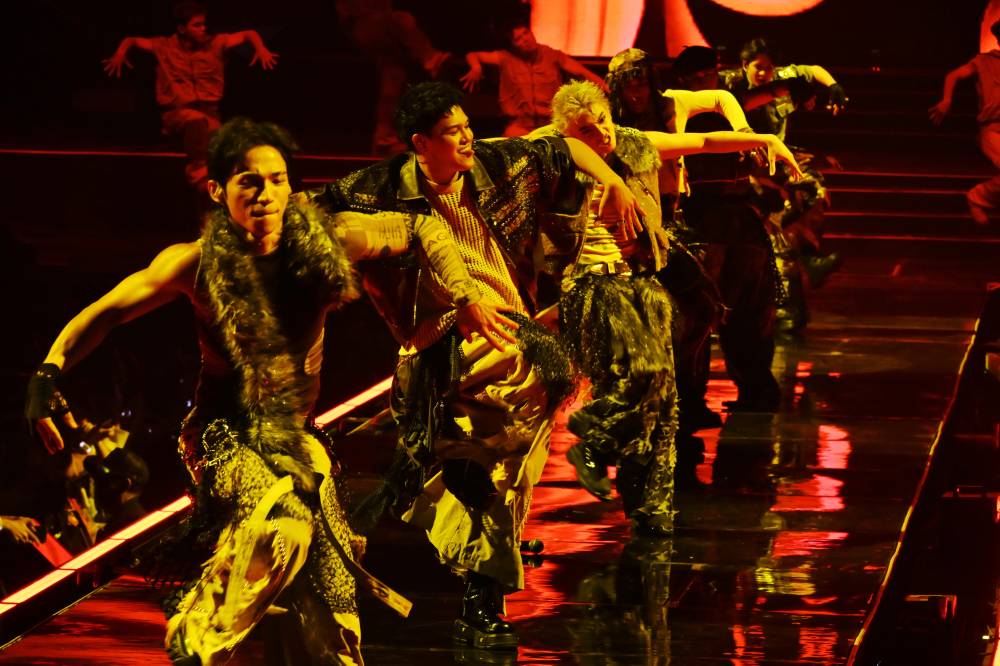
There was Jay Durias of South Border tinkling away with a jazzy, sultry keyboard break during Skusta Clee’s “Sa Susunod Na Lang,” or accompanying the rapper, whom I know to be a singer who can hold his own, but maybe not the kind who would pull off the head-tone-heavy chorus of “Ikaw Nga.”
Seeing Armi Millare without a keyboard still feels oddly jarring. But of all the collaborations that night, her moment with Ben&Ben made the most musical sense. I have always believed Millare is one of our best vocalists, and you don’t realize how deceptively difficult her songs are until you hear other singers attempt them—like Paolo and Miguel Guico reaching for the top of their range in “Tadhana.”

Diversity within genres
But while the title of the show heavily implies a revelry of artists with different musical proclivities—and, if you will, chronological mileage—the diversity can also be found within the genres themselves. And while those who don’t follow P-pop might be inclined to dismiss it as a cookie-cutter factory product, the lineup and performances showed that couldn’t be further from the truth.
Alamat’s music is the most explicitly Filipino, with tracks like “LuzViMinDa” coasting on the buzz of the kubing and the clacks of the gabbang. Kaia is much closer to bubblegum pop, whether floating through the dreamy “Hulog,” or delivering the radio-friendly bop “Tanga” with cute poses and twee-legged choreography.
READ: Wilbert Ross was ready when his moment came
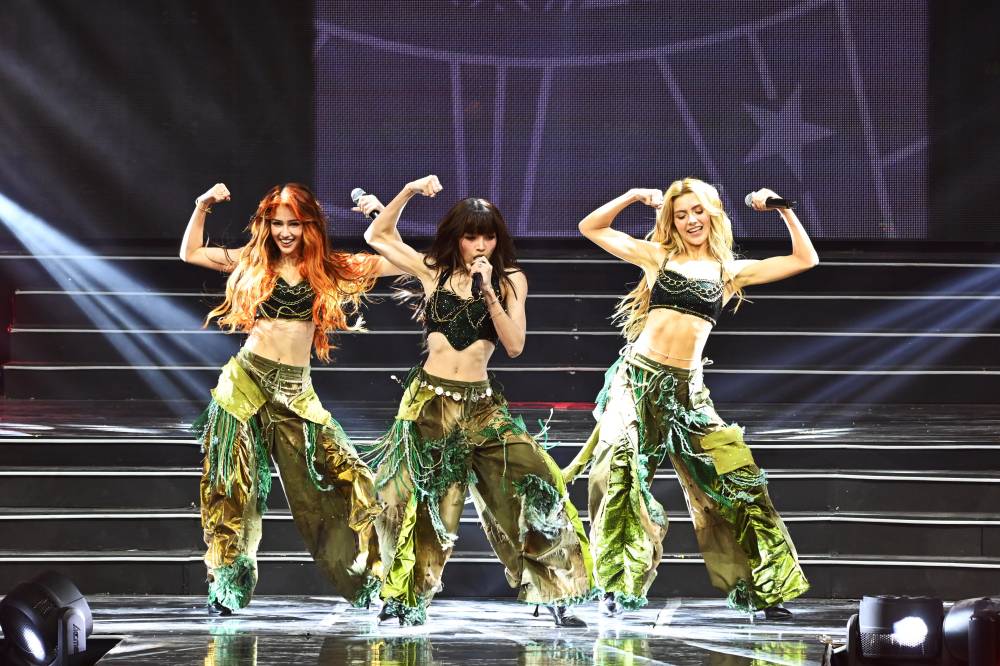
Sultry, gritty, and agile all at once, G22 straddles the line between singers who can dance and dancers who can sing, simply because they’re equally powerful doing both. With only three members, they were also more agile and spontaneous in working the stage.
Xonara, performing at the Big Dome for the first time, showed a self-assuredness that belied their relative inexperience. They oozed spunk and swag when locked in on the militaristic beats and melodic R&B of “Tabi,” but then turned giddy and almost shy in between numbers.
And when Alamat, Kaia, G22, and Xonara came together for “Maharani,” it was fascinating to see how a familiar piece of choreography associated with one group—Alamat, in this case—could take on different shapes and energy when performed by the others.
Simply music fans
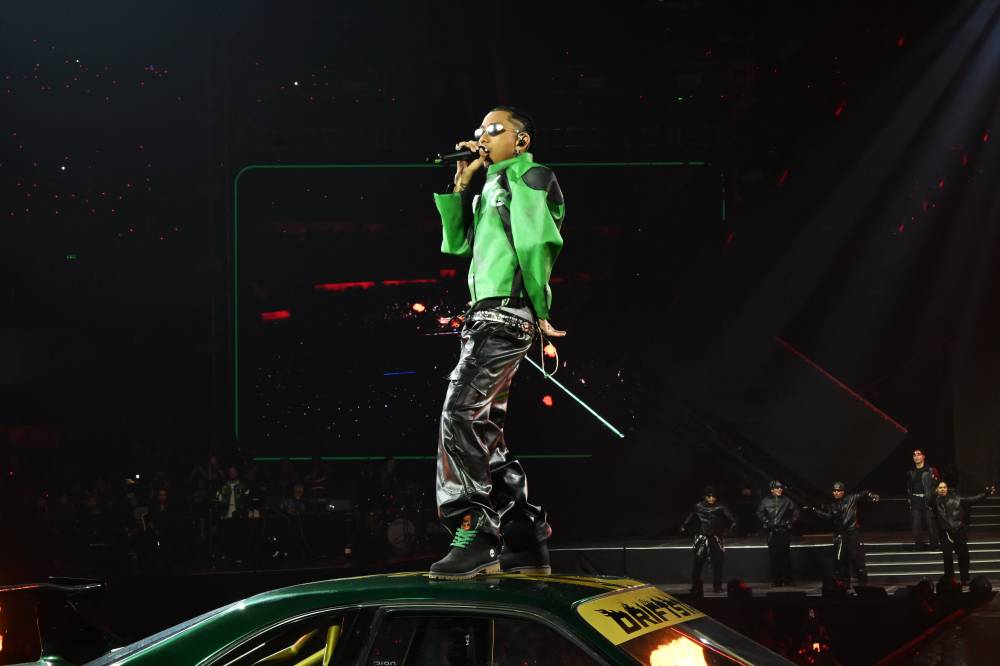
The same contrast could be found among the night’s hip-hop and pop-rock acts. Flow G delivered hits like “Driftstar” and “Rapstar” with startling speed and crisp articulation, with nary a waver in his cadence. Skusta Clee’s more malleable voice, meanwhile, lent itself to melodic hooks and smoother, soulful transitions.
The same contrast could be found among the night’s hip-hop and pop-rock acts
Ben&Ben had the crowd singing along and pondering life’s what-ifs in “Lifetime,” and offered healing and reprieve with a new, more cinematic arrangement of “Leaves.” SunKissed Lola added a choir to “Paki Sabi” and church organ flourishes to “Pasilyo,” giving their set a touch of Sunday morning service.
In any multi-artist lineup, there’s usually a sense that the crowd is fragmented—that people are there for a specific act, or at least prefer some over the others. I didn’t get that sense here, because everyone seemed genuinely immersed in the talent in front of them.
Perhaps no number better exemplified that union of generations than when Chito Miranda of Parokya ni Edgar appeared during Flow G’s set for “Harana.” For a couple of minutes, the song turned fanbases into, quite simply, music fans.
READ: Why Gian Bernardino is ready to let go of his red hair
Explosive as it gets
By around 11 p.m., my seatmate had already dozed off after nearly five hours of music. Then SB19 took the stage and, as if on cue, she sprang back to life. Their presence alone can change a night’s tenor—you lean in a bit closer or you don’t so much sit as hover over your seat.
And if the cheers throughout the night had been loud, the arena still had more to give. At some points, I could literally feel it shaking.
If the cheers throughout the night had been loud, the arena still had more to give. At some points, I could literally feel it shaking
SB19 is SB19; their intensity is muscle memory at this point. But it wouldn’t be an SB19 performance if they stopped at entertainment. This time, they brought out Bamboo, who matched the group’s energy as they ran across the stage and dueled on “Tatsulok,” delivering a timely and socially relevant reminder.
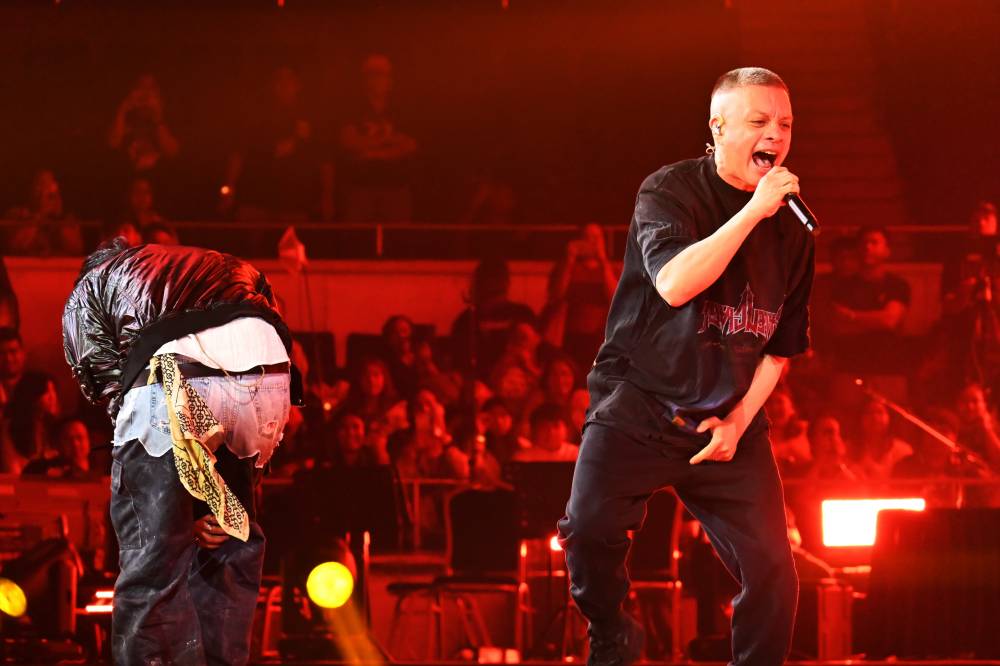
The performance was as explosive as it gets. But as far as surprises go, it didn’t feel as seismic as Rico Blanco’s appearance during the concert last year—a symbolic passing of the torch that made me wonder if crossovers between P-pop and artists from more traditional genres would eventually stop being novelties and become the norm.
This may well be happening now. And that’s a far better reason for the surprises to feel less surprising than my concert vantage point.