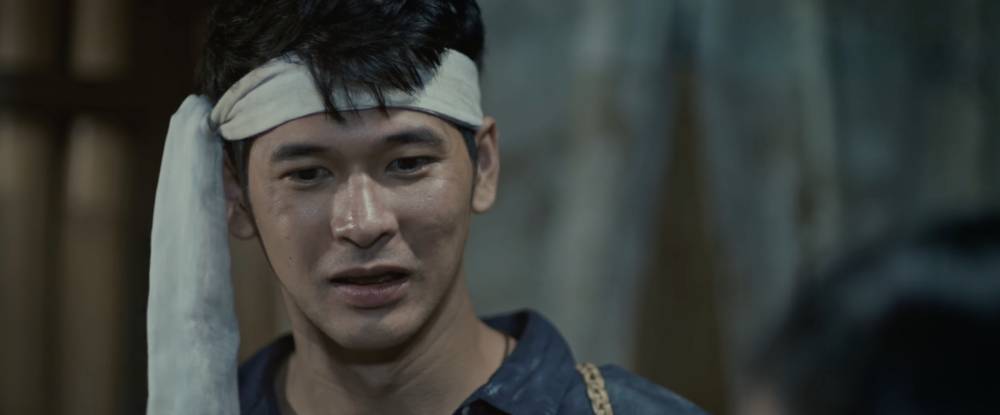
Over the weekend, I came across some news about Daloy Dance Company’s participation at the World Island Fair in Yeosu, South Korea, later this month, while also catching a show on the last weekend at the Doreen Black Box Theater at the Arete called “Subversive Lives,” a stage adaptation of the book of the same name, written by Susan F. Quimpo and Nathan Gilbert Quimpo.
The former is bringing two of their works abroad for four performances, showcasing groundbreaking Filipino talent on the world stage, while the latter is a brilliant new production that I feel demands a rerun, as it uses the power of theater to bridge history with the contemporary political climate—reminding us of the kind of battles we have fought to get to where we are as a nation, and what we have also lost in the process.
READ: 5 songs by women to summon your inner strength
A connection through water and dance
Daloy Dance Company will be presenting two of their pieces at the World Island Fair on Sept. 27 to 28, with two shows each day. The pieces are the dance film “Bari-bari” by the company’s artistic director Ea Torrado and the live performance of “Agos,” a new work by younger members of the company, Julienne Depatillo and Sebio Guevarra.
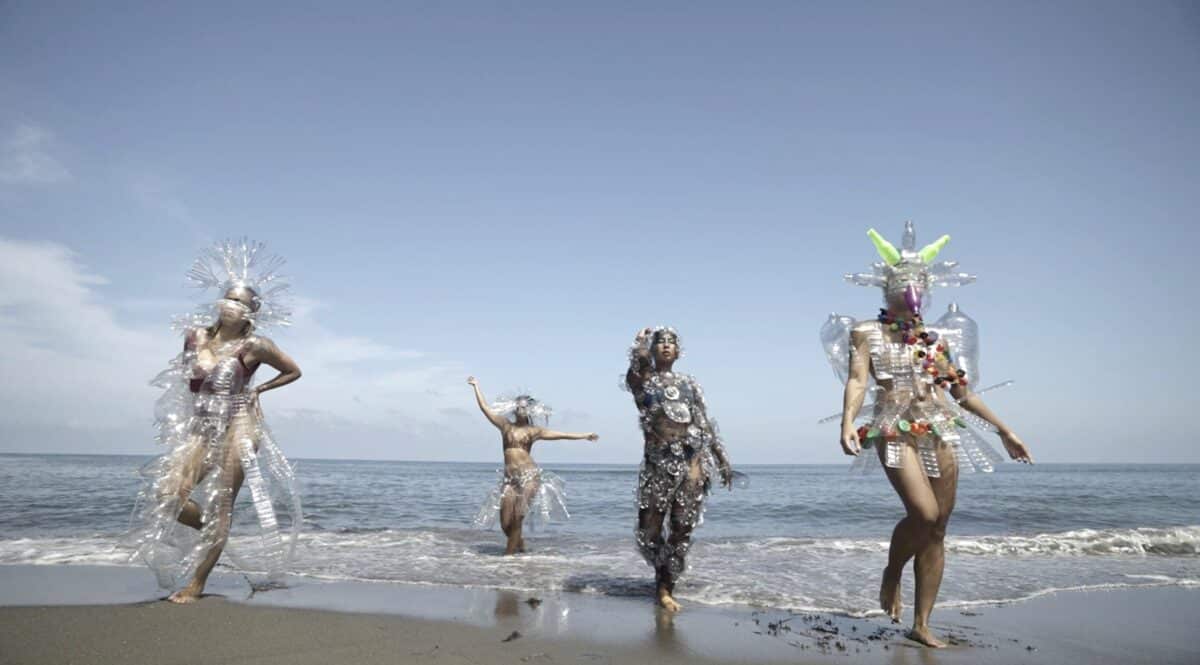
“Bari-bari,” an Ilokano equivalent of “tabi-tabi po,” is the Filipino ward against the supernatural. According to Torrado, it “communicates reverence, respect, and the intentionality to do no harm.” Created from 2020 to 2021, the dance film was choreographed by Torrado and filmed by Chino Neri, with costumes designed by Leeroy New.

Torrado shares that it was a piece that formed when she was living in La Union and reflected on the issues of plastic pollution, environmental stewardship, cultural memory, and the Filipinos’ connection to nature, “as something living and deserving of respect.”
Excerpts of the film—which contains movement, interviews, environmental testimonies, and images of bodies moving through land and water—will be presented at the World Island Fair, while a live performance of “Agos” will be presented simultaneously.
“Agos,” choreographed by Depatillo and Guevarra, is a new work that responds to the current ecological concerns. It’s a way for Daloy to develop young, new choreographers and foster new talent in the contemporary dance scene. The piece is meant to “explore interconnectedness, community, collective responsibility, and humanity’s relationship to the environment.”
Dramaturgically, the performance will connect the seaside locations of Yeosu, La Union (through “Bari Bari” and “Agos”), and Mindoro through the connection with the Philippine Pavilion, which co-produced the presentation—along with the D’Aboville Foundation and Demo Farms Inc., which have been at the forefront of environmental conservation, cultural engagement, and responsible tourism.
Contemporary dance has its own unique way of telling stories and delivering messages, and Daloy has been working hard to represent the country in many dance festivals and exhibitions around the world for as far as I remember. And once again, Philippine talent and creativity take the spotlight on the world stage, and we don’t support our artists enough.
Theater as a bridge to history
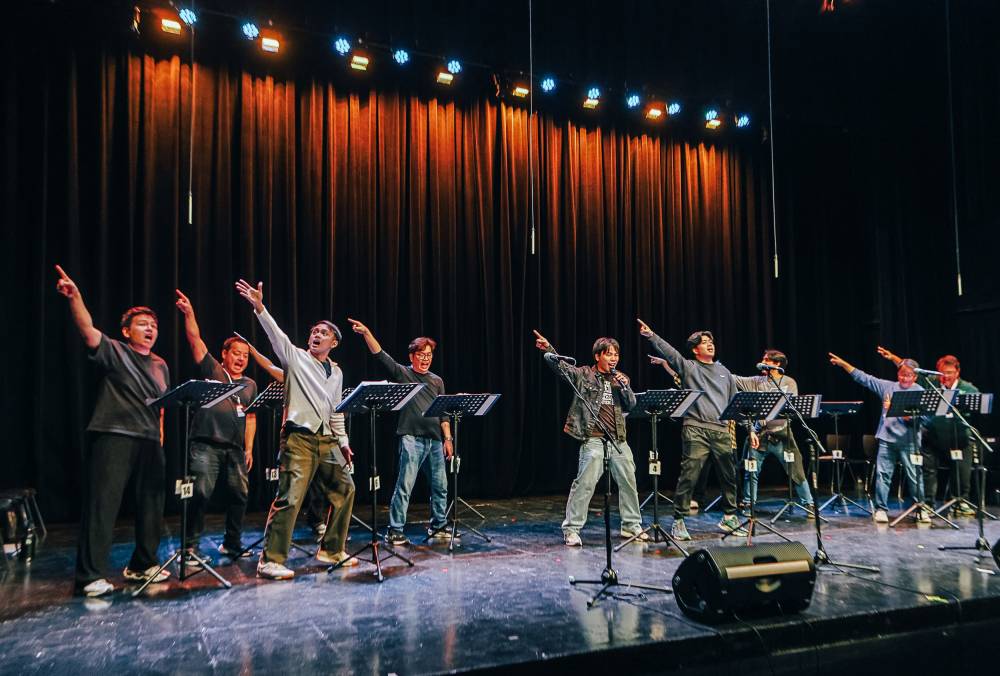
On the other hand, “Subversive Lives,” directed by Delphine Buencamino, is a dynamic theatrical adaptation of the book of the same name, which recounts the lives of the Quimpo siblings, who were revolutionaries during Martial Law.
The play is narrated by the youngest sibling, Susan, as she embarks on the book project—gathering accounts from her siblings who were activists during the Marcos dictatorship. Activists who joined rallies, became members of the communist party, were detained and tortured, and lost family members in the chaos of that era.
Buencamino’s brilliant direction has the bulk of the audience at the center of the Doreen Black Box Theater of Arete—with computer chairs that can swivel. The stage circles them so the audience can turn to follow the action. Then librettist and dramaturg, Sabrina Basilio, has all 10 siblings introduced at the beginning—as well as a narration of what will happen to them.
And then the story unfolds through 10 different accounts, running in circles around the audience with the ten performers doing dual roles, where each plays a sibling and then doubles up to play the parents, spouses, soldiers, fellow activists, and other characters of the play.
On the technicalities alone, “Subversive Lives” is a deeply engaging play that makes full use of its ingenious stage design (set design by D Cortezano) and its magnificent cast—who can quickly shift gears and exit the stage to do a quick change and come back as someone else completely, to immerse the audience in that world.
READ: How do we break the Hollywood addiction?

True accounts from real people—amplified by theater
What makes “Subversive Lives” even so much more powerful is the story behind it. These are true accounts from the mouths of real people.
Told in the voices of the performers—though a dramaturgical decision was to approach the material for emotional truth, so some lines that are written and attributed to one sibling may be delivered by another in the play for creative reasons—we relive the anxiety and fear of that era. But more importantly, we are encouraged to embrace the revolutionary spirit that aims to fight back against tyranny.
But the play also details the loss: the family’s sacrifice. The price this family paid to free the country from the shackles of a dictator. It is relentless and unforgiving. It’s so sobering but also eye-opening. Reform is ideal, but until the system truly changes, one must not discount the power of revolutions to tear down what needs to be torn.
I was a child during Martial Law, and my parents shared their own stories about that time; they were active participants in the EDSA Revolution, but they were not as deeply entrenched as the Quimpo family was. I know of these stories that are portrayed in the play, but to hear a firsthand account of the atrocities committed during these times… there’s an emotional resonance that you can’t help but bring with you after you leave the theater. I’m very much interested in reading the book now. It hits differently.
It’s why I hope that “Subversive Lives” has a rerun. This is something that more people should see. Its immersive theatricality has a way of transporting us directly into that period in a way that a movie cannot. The screen will keep us at a protective distance—a safety net, if you will—but the play’s immediacy brings you there.
I remember in elementary and high school, the Martial Law era was a short chapter in our social studies class, tackled in one or two days. The importance and the implications of that period in our nation’s history were so easily dismissed. “Subversive Lives” helps it become real; it contextualizes it through the lens of the ordinary Filipino.
This is important theater. I thought Tanghalan Ateneo’s “Emilia” would be my highlight for theater in 2026, but “Subversive Lives” is a strong contender for my favorite theatrical experience this year.
Between Daloy’s opportunity to amplify our voices, talent, and creativity in South Korea and the exciting new works being produced locally, there’s really no need for us to look outside for culture and/or entertainment. Our stories, told by our artists, are all we need.