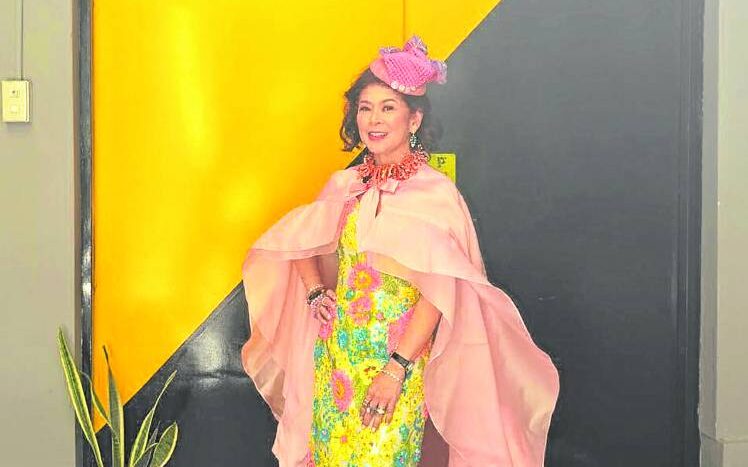
“2026 is the year of the woman farmer,” says Karla Delgado. And at Kai Farms, a permaculture-based farm located in Silang, Cavite, that future is already taking shape.
At Kai Farms, Delgado, herself a Gen Xer, leads a multi-generational group of women of Gen Z chefs and students, millennial agriculturists, and a farm manager in charge of an entire team of men. This diversity in age trickles down to perspective. “It’s collective intelligence and wisdom,” Delgado says. “That’s what being a woman-led organization is.”

“It’s collective intelligence and wisdom. That’s what being a woman-led organization is.”
In a field long dominated by men and industrial systems, her version of leadership is not imposed but shaped by lived experience across generations. “It’s not about ego,” she explains. “It’s about accessing the wisdom in the group.”
She recounts how on International Women’s Day, the team held an internal retreat, where the men cooked while the women gathered in a circle to reflect, meditate, and share. The prompt was, “What seeds are you planting?” The day became a space for collective intention, grounding in purpose. Delgado, who maintains her own daily meditation and energy practices, from Reiki to Karmic Quotient Healing, sees this inner work as inseparable from leadership.
Land as a living system
At Kai Farms, the 25-hectare land is treated as a living system, not as a commodity. Through solar-powered structures, rainwater harvesting systems that can store up to 19,000 liters, and a thriving medicinal forest, the farm produces the rare but essential clean air, clean water, and healthy soil.
It is a regenerative model that resists the logic of conventional agriculture. Instead of depleting resources, it restores them by healing soil, strengthening biodiversity, and designing food systems that can withstand both typhoons and drought.

Much of what grows here cannot be found in supermarkets. Delgado points to what she calls the “wild things”: edible leaves like talinum, or pansit-pansitan, known for its anti-inflammatory properties; turmeric that thrives easily in the soil; and even plants like gotu kola, prized by fine dining restaurants in Manila. There is also binahian, malunggay in its native, perennial form, shrubs that continue to give without the need for constant replanting, as well as tawa tawa, an anti-dengue medicinal plant.
“We don’t see weeds as bad,” she says. “They’re part of the ecosystem. They’re serving a purpose.”
Many of these plants are not just food but also medicine that addresses the chronic illnesses of today. Guava leaves for immunity, wild greens for inflammation, roots and herbs long embedded in Philippine natural healing.
Visitors can harvest their own ingredients from the garden, sometimes guided by a simple market list, and cook with what they gather, shifting from consumer to participant.

The permaculture farm goes straight to the table, with Kai Farms’ earth kitchen. Here, meals are prepared, while workshops, conventions, and creative exchanges are also held. Outside is the amphitheater, built of rocks by a team of skilled craftsmen from the Cordillera. Delgado herself grew up in Baguio, attending public school where she learned to farm and cultivate her own patch of vegetables.
Power, reimagined
Delgado’s ethos extends beyond the farm and into corporate work. As chief sustainability officer of the Transnational Diversified Group, a global business group founded in 1976 with over 40 companies spanning logistics, ICT, travel, and investments, Delgado operates at the intersection of business, environmental stewardship, and social impact, embedding sustainability into strategy, investments, and operations. “Business has the power to transform society,” she calmly asserts. “And the responsibility to do so.”
“Business has the power to transform society. And the responsibility to do so.”
For Delgado, staying within the corporate structure is intentional. While her instincts may pull her toward the land, she recognizes that real, large-scale change requires influence within institutions where resources can be effectively mobilized.

Delgado still points to small, regenerative systems as the real answer to food insecurity, encouraging backyard gardens and community farms. The team teaches grow-your-own-food workshops, often free for public school teachers and students, and supports community-led gardens, from the Garden of Hope in Payatas to other grassroots initiatives rebuilding after typhoons.
Lately, they have also been distributing the cuttings of climate-resilient plants—perennials that can survive extreme weather and continue producing food over time. “I don’t see other organic farms as competition,” Delgado says. “The more there are, the better we all are.”
Growing a future, collectively
If there is a single thread that runs through Delgado’s work, it’s that change is collective.
“We can’t do this alone,” she says. “We need to find the good people, and build together.”

“We can’t do this alone. We need to find the good people, and build together.”
In a world grappling with the climate crisis and increasing uncertainty, her approach offers a model of power that is collaborative, intuitive, and deeply rooted in care.
At Kai Farms, the future is not imagined. It’s already growing.
Produced by Pauline Miranda. Photos by Claire Salonga. Art direction by Zoe Sabandal.