Ten minutes is all it takes for Mercy Malabanan to walk from the grand palazzo she tends to the Duomo di Milano, one of the most breathtaking cathedrals in the world. For most, this would be a luxury, but for Malabanan—fondly known as Ate Mercy—it’s been her everyday life for 15 years.
You might have seen Ate Mercy’s videos online. In a crisp Peter Pan collar dress and a lace apron, she sets a table of colorful crockery and fine silver in an al fresco patio. In one reel, she takes a snap of the Villa Ephrussi de Rothschild in Saint-Jean-Cap-Ferrat. Most often, she’s in the kitchen in Milan, whipping up complex Italian dishes.
And then there are the flowers. It’s primavera now, and her feed is blooming with buds—from fresh, fat roses to sunlit tulips.
This eye for beauty has made Ate Mercy a phenomenon. Her growing following (157,000 on Facebook, 11,000 on Instagram) shows just how many people can relate. But what draws audiences even further is that she’s become a portrait of what an OFW’s life can look like when talent, hard work, and discipline come together, rounded out by dignity, while still humble.
Like many OFWs, her humility comes from a history of grit and gumption. Ate Mercy grew up in Batangas, where she met her childhood sweetheart and future husband, Amore. Later on, she built a steady career as a bank teller. The job suggested a predictable future—until a scam upended everything they had saved. This pushed her to leave the Philippines and work abroad as an OFW.
READ: What I learned from owning my first iPod at 35
Amore and the road to Italia
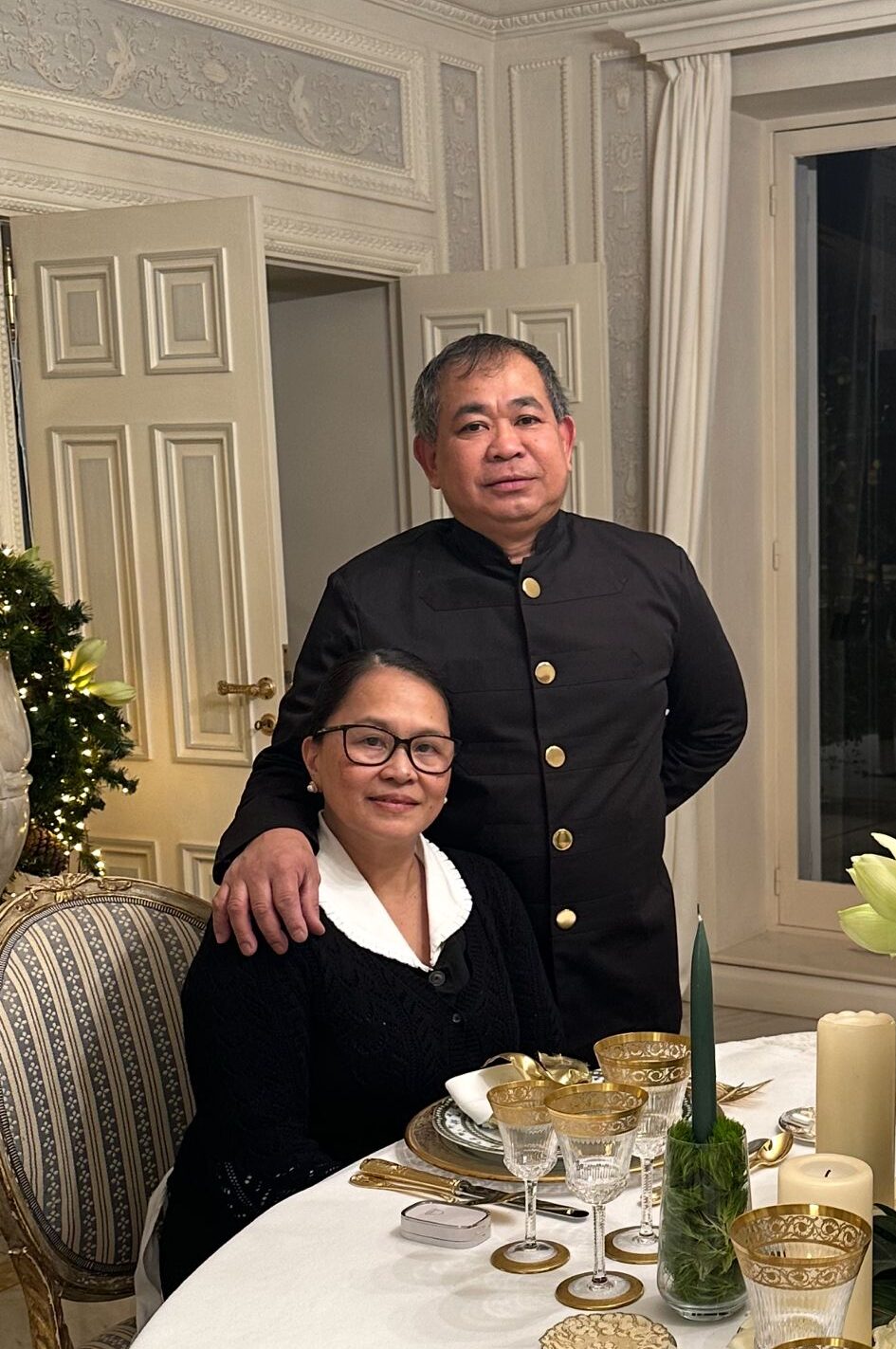
Ate Mercy and her husband Amore are luckier than most, both working in the same household. They have known each other since childhood, singing in the same church choir at seven years old, then later having a secret marriage.
Through nearly 15 years abroad, Amore has remained her anchor, with their relationship always grounded in faith, “’Yong naging foundation ng love namin sa isa’t isa is si God. Siya ‘yong center.”
Amore has been an OFW for a longer time than Ate Mercy, having worked in Saudi Arabia and Taiwan. But his experience helped guide Ate Mercy’s own journey. At first, she was posted in Calabria, where she recalls cooking simple food heavy on garlic and chili, while navigating a dialect so thick she could barely distinguish spoken Italian. But eventually, she learned the language. An old classmate in Turin later connected her to a new position with a noble lady, whom she chooses not to name, while remaining discreet in her content. “Nakikita niya ’yong mga vlog ko,” she laughs.
Six years on, that trust is intact. Much can be said about the generosity and kindness of her employer, too, who saw Ate Mercy’s potential early on and sent her to formal training with six months of language classes, followed by advanced culinary studies.

Head of house
Ate Mercy manages her employer’s private palazzo in Milan. She prepares meals, lays out clothes and shoes, and maintains the four floors and eight bedrooms, along with Amore. When her employer travels, Ate Mercy travels with her to her bases in Paris, Switzerland, and Geneva. In each residence, there are separate staff, but it’s Ate Mercy who holds the thread in Milan.
She spells out the arrangement: “Ako ‘yong nasa head office. Tapos ‘yong mga branches, iba’t iba nang tao ’yon.” And when I ask if she would consider herself a “mayordoma,” she bristles a bit. “Hindi. Mas head of house,” she clarifies, as a mayordoma commands a staff, but Ate Mercy is the staff and the standard both.
With formal culinary training, she now prepares Italian dishes with precision. She shares photos of spreads, from a delicate “soliogla al forno,” or baked sole to a fluffy “fritatta di uova bianca con ricotta e spinaci,” or white egg frittata with ricotta and spinach. Alongside it is a beautifully composed insalata, or green salad with prawns, cherry tomatoes, avocado, orange, and pomegranate, as well as puntarelle dressed with anchovy cream, lemon, and olive oil, crowned with burrata.

For dessert, her chestnut cake, or “monte bianco, torta di castagne” looks absolutely spectacular, its chestnut tendrils spilling off the cream base.
While the spreads she makes show Ate Mercy’s technical training, they also show her instinct, with an eye for balance and color. Clearly intuitive and sensitive to the world’s natural rhythms, her work shows how she infuses care into everything she does. And this translates to her role as a mother as well.
READ: Stay awhile: The design of hospitality
The children she raised from a distance
Ate Mercy’s voice shifts immediately when she speaks about her children. Still warm, it softens further when she recalls leaving the Philippines when her eldest was 12 and her youngest seven. Her youngest is now 21. “Pag nasa Italy ka, ang ganda—wala kang makikitang pangit na lugar. Dati ayoko na makikita ng mga anak ko na parang ang sarap ng buhay ko dito.”
For four years, Ate Mercy didn’t post anything on Facebook. She didn’t want her children to see only the surface of Europe’s beauty and gloss over the sacrifice underneath it. She wanted them to understand that this life was work—and that it was for them.
The communication between mother and child never stopped, either. Every day without fail, she would ask them on video call, “Kumain ka na ba? Ano ang isusuot mo? May baon ka ba?”
“Kahit na lumaki sila ng wala kami, lumaki silang mabuting bata… responsable, masipag.” she proudly says.

Her eldest has since graduated from Mapua University as magna cum laude. During the pandemic, that same child, watching his parents get older in European palazzos, hatched a plan. He asked for seed money, bought a pair of goats, and built a farm. The operation has since grown to several hundred pigs and a wildly successful goat enterprise. The second child is completing their degree with potential cum laude status at Mapua as well. Together, they have told their parents to come home.
In Batangas, they are all now dreaming of opening an Italian restaurant, a fitting tribute to the country that maximized the potential of their mother’s talents.

What Ate Mercy would pass on
I ask Ate Mercy what lesson she most wants to leave behind.
“‘Yong aral number one,” she says without hesitation. “Huwag po nating pababayaan ‘yong mga anak natin. At ipaalala natin sa mga anak natin ‘yong respeto sa mga tao, pagmamahal sa magulang, paggalang, at huwag kang makakalimot na lumingon sa pinanggalingan mo. Always be humble.”
She pauses, then adds a reflection, “Kung maibabalik ko lang ang panahon, gagawin ko talaga lahat para sa mga anak ko. Kasi ‘yong ginagawa ko dito, hindi ko nagawa sa kanila noong bata pa sila.”
It’s this particular grief of every OFW who has given their best hours to someone else’s household while their own family grew up in photographs.
Ate Mercy’s surname, Malabanan, has its roots in the word “laban,” suggesting a battle and endurance. Whether by coincidence or fate, this name reflects her determination well.
And yet, Ate Mercy still laughs easily as our conversation comes to a close. The flowers need arranging, the mistress of the house just finished dinner, and Amore is close by. In Batangas, her son is cultivating a farm, while the family dreams of opening an Italian restaurant shaped by everything Ate Mercy has carried across oceans as someone who has touched thousands of hearts without fanfare or grand gestures—but through the dignity of a life truly lived for others.