When a restaurant receives its first Michelin star three years after opening, and has kept it for nearly 30 years, then the chef must be doing something right. And frankly, Nandu Jubany is doing a lot of things right in his eponymous farmhouse restaurant Can Jubany, which opened in 1995 in the countryside of Calldetenes, his hometown and an hour’s drive from Barcelona.
No one can really tell what to expect from a restaurant of this caliber, but looking around the vast expanse of land where Can Jubany sits and the thriving two-hectare fields overlooking the farm-to-table restaurant, it’s obvious that Nandu seems to have figured out the recipe to longevity: Tradition as a way of life. A respect for seasonality. Embracing change and innovation. Dedication to using food at its source.
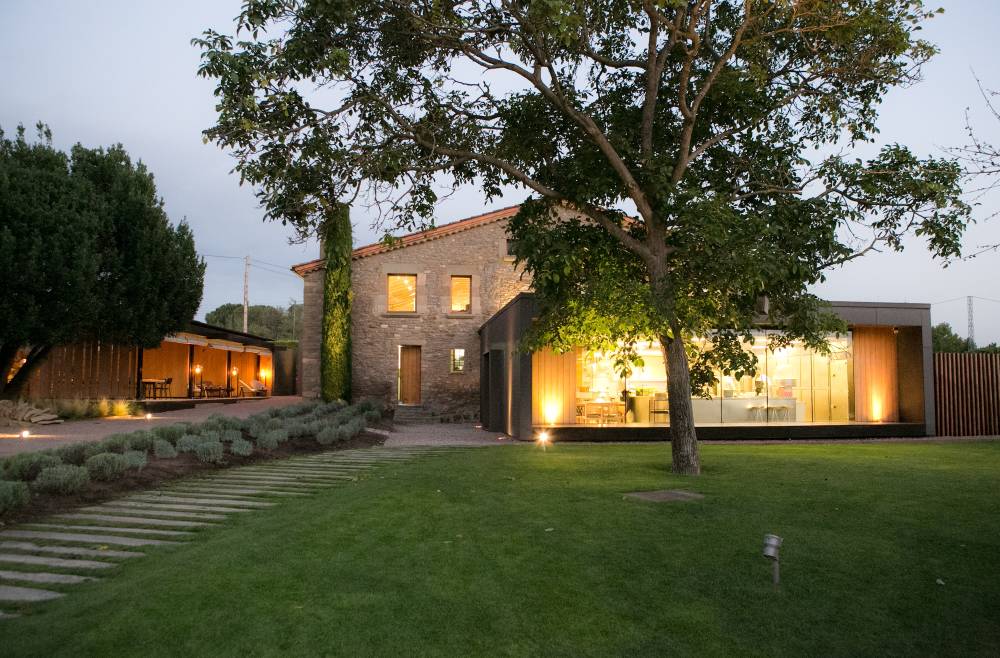
And plenty of reverence for the people who traverse all the way to Can Jubany.
“Our star is the clients,” he says happily under the springtime sun. It’s no surprise then that Nandu has held a Michelin star and three Soles Repsol (the Spanish equivalent of Michelin stars) for this long. He knows where his priorities are and what he needs to focus on.
Catalan cuisine comes to life
As we wander around the Can Jubany grounds, we learn a lot of things about the talented third-generation restaurateur himself. The 55-year-old Nandu started the restaurant at the old stonehouse in 1995 (an impressive tenure) when he was 24, together with his wife Anna Orte, who was 23 at the time.
Fifteen years ago, they rebuilt everything, including the reception and the outdoor lounge where they serve aperitifs of spinach meringue, wild mushrooms in vinegar, and soufflé potatoes that plunge guests right into Catalan cuisine before the main “Great Can Jubany Meal” inside.
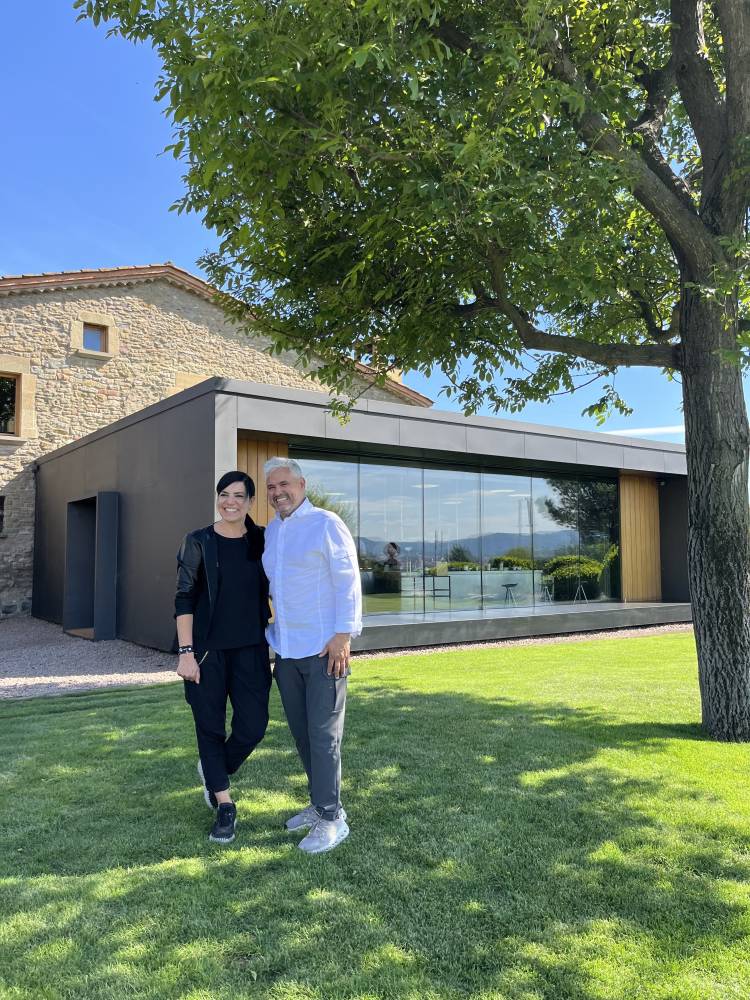
Coming from a family of restaurateurs who have a total of 14 businesses, including a hotel and an events company, as well as supplying croquettes and cannellonis to Tesco and Marks & Spencer in the UK, Nandu appears to have developed a knack for defying expectations since his early days.
In Can Jubany, for instance, this is reflected in his “eating with respect” philosophy, where the tiniest details are carefully considered
“When suppliers used to come here to deliver food, they say, ‘Tell your father to come out, I want to talk to him,’” he shares about his experience, before retorting, “‘Sorry, my dad isn’t here, he passed away. I’m the owner and the boss here, you have to speak to me.’”
That candor, which should never be mistaken for cockiness, has carried over in many aspects of his life. In Can Jubany, for instance, this is reflected in his “eating with respect” philosophy, where the tiniest details are carefully considered to make the whole experience as right as possible.
His garden cultivates tomatoes in bamboo trellises, a variety of herbs, and Maresme peas (“green pearls”) prized for their beautiful caviar-like texture and sweet flavor profile. Meanwhile, black and brown chickens only eat corn, vegetables, and bread, then lay white, brown, and faint teal eggs with vibrant yolks and a strong membrane that holds up the dome.
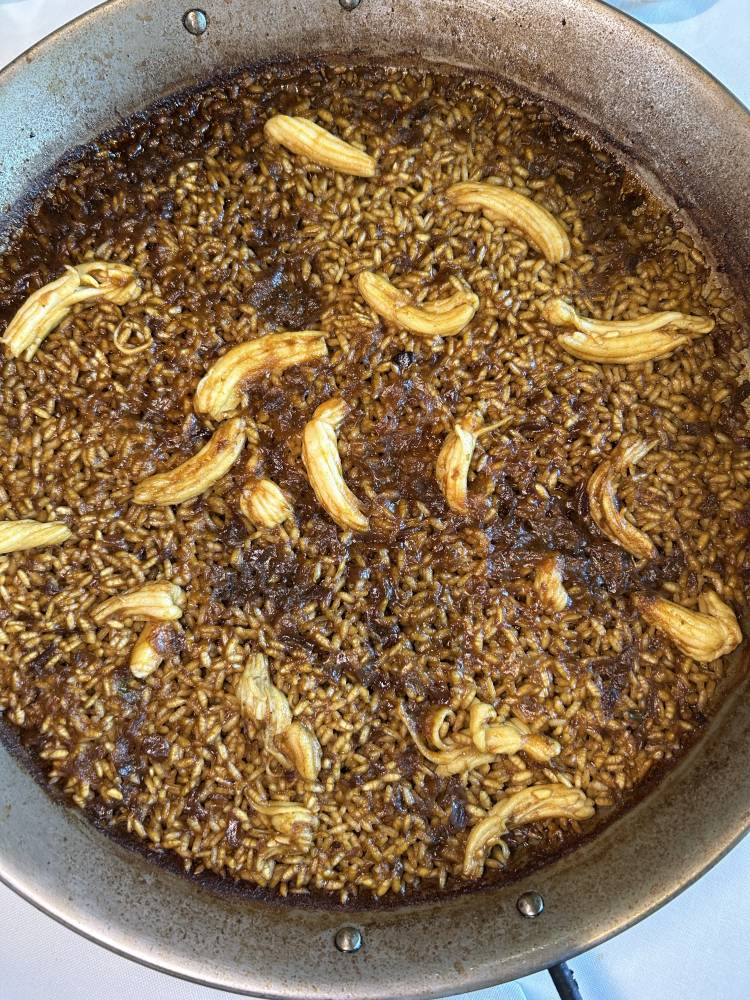
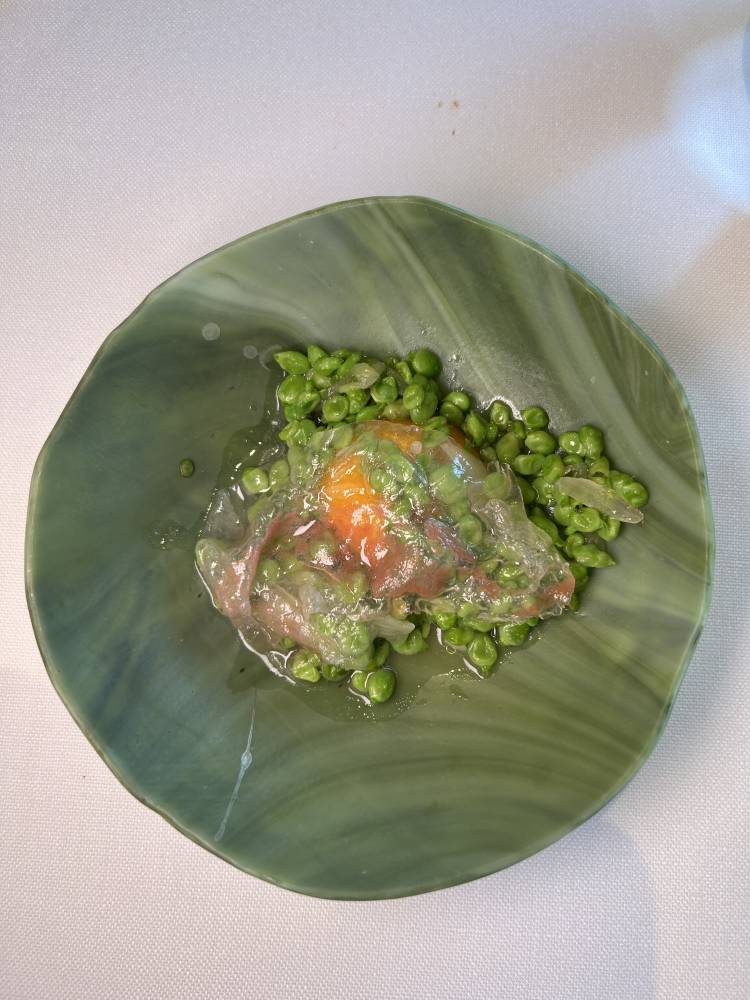
On his Great Can Jubany Meal, where they “bring the landscape, the ‘terroir,’ and emotion to the table,” Nandu showcases his ideology the most in his standout course of Maresme tear peas, finding form and flavor on a thin veil of pancetta, egg yolk, and truffle. The rest of the menu details Nandu’s expression of Catalonia, covering everything from white asparagus and sea urchin to a bold dry rice with magnificent espardenyes (sea cucumbers harvested in the Mediterranean) and langoustine broth. His talents, however, aren’t only earthbound.
READ: Afternoon tea with chef Jessie

In-flight catering, Can Jubany-style
Just recently, the ebullient Nandu partnered with Singapore Airlines to design a business class menu for its direct Barcelona-Singapore flights—a feat that isn’t as far-fetched as it seems for the chef.
When he opened FOC Restaurant in Singapore in 2014, Nandu used to fly to the city every two months in business class and was impressed by the roster of chefs who had created menus for the airline, such as Indian celebrity chef Sanjeev Kapoor, Japanese culinary icon Yoshihiro Murata, and Samoan-born New Zealand chef and “MasterChef” judge Monica Galetti.

Nandu knew then that he would like to someday craft a taste of Catalan cuisine on board. It may have taken years and a pandemic disrupting the original March 2020 collaboration, but now both parties reconnected and agreed that it was finally time to have the first Catalan chef quilt together four exclusive menus that define his sensibilities—seasonality on land, sensitivities in the air.
“Cooking for an airline is not just about adapting a recipe; it is about rethinking it so that it inspires on board just as it does in a restaurant”
It wasn’t too much of a stretch, given his background in catering events, but a key part of Nandu’s approach is providing the same experience amid different circumstances. Blurring the friction between cabin conditions and the Can Jubany countryside context meant boosting umami with complex flavors (from tomatoes and mushrooms to roasts, reductions, and spices) to counter low humidity, impaired taste, and a dehydrated nose and mouth.
There is also the matter of dealing with different operations—from preparation and heating to serving and food safety guidelines.

“Cooking for an airline is not just about adapting a recipe; it is about rethinking it so that it inspires on board just as it does in a restaurant,” Nandu explains.
READ: Lusso chef strikes a balance between luxury and accessibility
A seasonal menu that takes flight
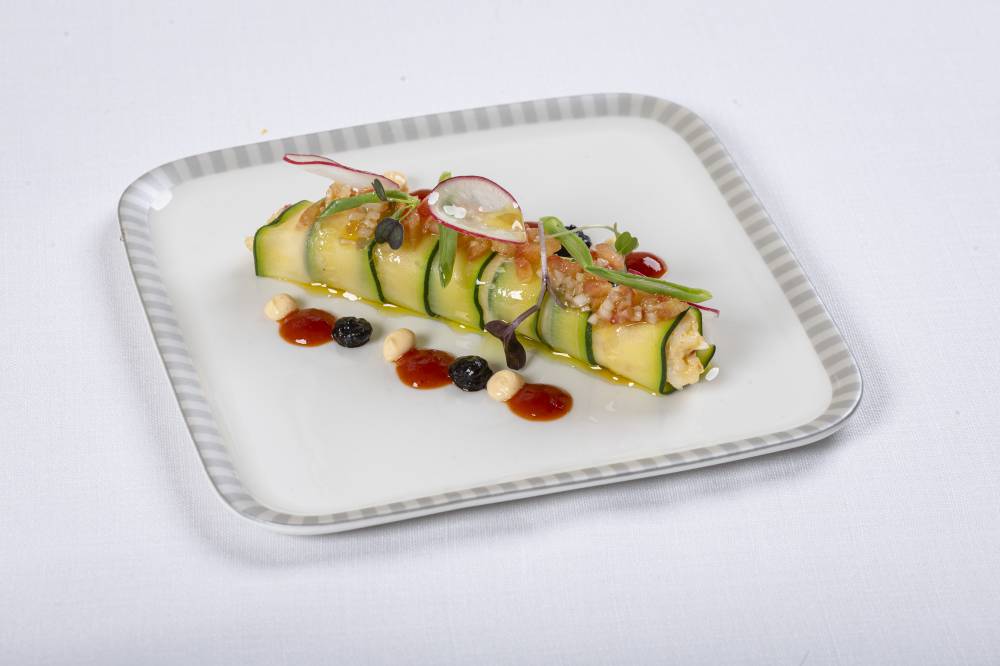
The spring menu takes off until June 2026 with a three-course menu that gets it right. A mouthful of zucchini caneló with crab is relentless in its explosion of black garlic sauce, Sriracha mayonnaise, and tomato salsa, while the Catalan-style bacallà (salted cod fish in tomato sauce) is textural on the tongue owing to the raisins and toasted pine nuts and the tingling sensation of the salted fish.
And for dessert, Nandu goes all out with a hefty slice of pastís de formatge, a cheesecake of epic proportions and palatability made with a blend of cream and Bauma cheese from Borredà—served with raspberry compote on the side.

From Singapore Airlines’ perspective, such unique in-flight products improve customer satisfaction and perceived value. “Travel is more than just getting from one place to another,” says Kevin Lee, general manager of Singapore Airlines Spain and Portugal. “It’s about connecting people to diverse cultures and communities, and food has always played a special role in fostering those connections.”
“Travel is more than just getting from one place to another. It’s about connecting people to diverse cultures and communities, and food has always played a special role in fostering those connections,” says Kevin Lee, general manager of Singapore Airlines Spain and Portugal
One of the hallmarks of a great chef is consistency across the board—in finding the best ingredients, cooking, plating, delivering a memorable experience, being a great leader and mentor, and the never-ending pursuit of personal growth.
Having experienced Nandu’s full-fledged menu on the ground and up in the air, I can see (and taste) for sure that this Catalan chef soars on the strength of his adventurous spirit, no matter where he finds himself.