Sure, you can chalk it all up to marketing calendars, but the coincidence seems to point to interesting truths. Men’s Health Month also falls in the same month—June—allotted for Pride Month, not only celebrating the LGBTQIA+ community but also commemorating their struggles, starting with the 1972 Stonewall Riots, which followed raids and arrests on gay men.
One might ask, why do we need a Men’s Health Month? What exactly are we celebrating aside from an opportunity for brands to clear out old stock and introduce new product lines to a masculine market? Don’t men inherently hold more political and economic power than women and people whose sexual and gender identities don’t fall under the norm?
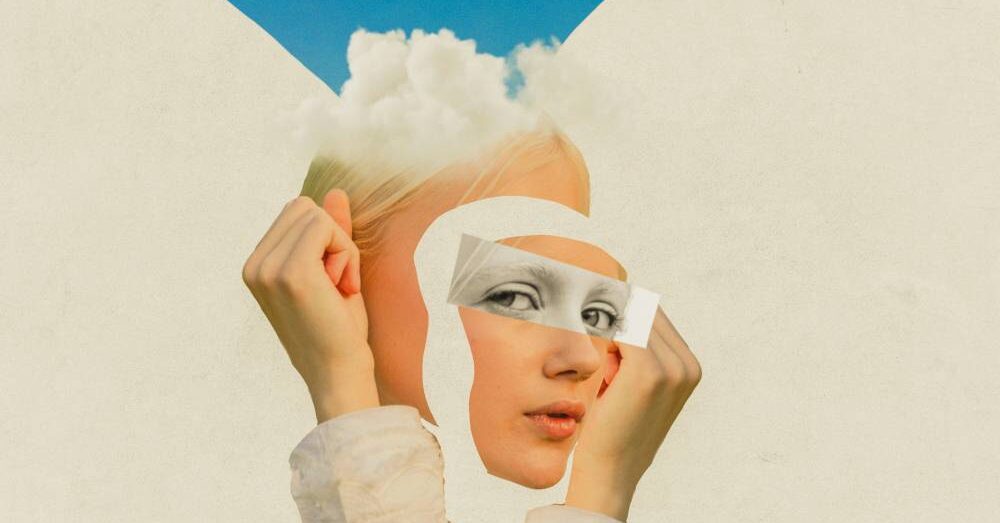
But what we’re specifically celebrating—or more accurately, championing—is men’s mental health. To champion means to advocate for, and to advocate for suggests a lack, a dearth, a need of and for what is being advocated for: men’s mental health.
You can Google the exact numbers, but we know men are more likely to experience loneliness and isolation, suicidality and suicide attempts, and commit acts of violence resulting in crime. Are these in spite of or because of the ideal of manliness as a lack of emotion?
We know men are more likely to experience loneliness and isolation, suicidality… and commit acts of violence… Are these in spite of or because of the ideal of manliness as a lack of emotion?
So how does this tie into Pride Month? What do the gays have to do with the guys?
It all dates back to ancient history
I think it’s more of a question of what these masculine ideals do to all of us. I think of it as a holdover from ancient, nomadic, and tribal societies. It’s been said that today, we’re operating on primal brains with centuries-old laws and modern technology, which makes for the heady, crazy mix we often see—not only in the news cycle but in everyday life.
Imagine: You’re born a boy in a tribe of about 50 individuals that roams a 50-acre territory arbitrarily defined by other rival tribes with similar numbers of people and similar territory sizes. To ensure the efficient use of mental and caloric energy—thus ensuring group survival—the tribe delegates to specific individuals the different roles of hunter, gatherer, seer, healer, homemaker, and more.
Your bones and muscles are almost always larger and stronger than those of the girls and eventually, the women. Also, you’re not capable of birthing a new human to sustain the tribe’s population. You have the interesting and ultimately unfortunate combination of being strong but also disposable.
You have the interesting and ultimately unfortunate combination of being strong but also disposable
READ: The importance (and danger) of being earnest
More often than not—save for a few exceptions, like if you’re born with a handicap or prefer to act as or present yourself as a girl—you’re often trained to become a hunter or warrior.
It’s expected of you to master the martial arts, to wield violence to bring home food for everyone, while also wielding it to protect the tribe’s physically weaker members: women, children, and the elderly. And not just from animals preying on humans but also from the menfolk of hostile tribes.
So boys are socialized with certain expectations. Certain values and traits are upheld while other values and traits are deemed unworthy, unmanly. With this come specific anxieties—fears of not being “man” enough, not being useful enough, of not only being rejected by the tribe but by fellow men in the tribe.
Same same but different
Imagine these mores and traditions being repeated for about 300,000 years until around the time when agriculture becomes mainstream and lived realities, and the resulting social expectations and laws change somewhat. Fast forward by around 1,800 more years, when industrial technology changes lived realities and resulting social expectations and laws even more.
And then fast forward to today, where digital technology is now changing lived realities and social expectations—all as the laws struggle to catch up. Can our brains, wired for the things they were punished and rewarded for during the better part of these 300,000 years, catch up?
Okay, you might agree that it’s about old hardware trying to run new software, but why is it about men specifically? Don’t women and everyone in between or mixed and matched go through the same tensions?
I’d argue that it’s because the social expectations and laws for the past hundred thousand or so years centered around men and manliness. This is what scholars studying society have called the patriarchy.
READ: In-fighting, grandstanding, colluding—kawawa ang Filipino
A system that also harms men
While it’s moot to argue whether or not patriarchy has, in those past 300,000 years, harmed the gals and the gays, it apparently also harms men. We now have technologies and systems that render the traditional divisions in a tribe obsolete, and yet, the same expectations and anxieties persist.
And so we go back to the numbers related to men’s mental health and our statistical propensity for crime and violence. Patriarchy, in its most obvious forms, denies the gals and gays civil rights, and at worst, even punishes them for being themselves (ahem, religious laws in conservative societies), but patriarchy, we are beginning to learn every June, also harms men.
Men are still socialized to behave in ways that center domination over shared understanding, winners and losers over win-win solutions, and personal pride over thinking as a team. Small wonder why we as a sex feel lonely, frustrated, and undervalued.
Interestingly, however, we can also turn to the past for inspiration on how to move forward. The 2014 documentary “Walang Rape sa Bontoc” comes to mind here. Apparently, there are people who developed more egalitarian mores, expectations, and laws. While imperfect, the gals and gays in these societies commanded the same respect as the men despite having different roles.
Today, we’re no longer strict about what you do for a living: You can hunt, you can gather, you can weave, you can heal. Still, the women and queer folk of today continue struggling to attain the same opportunities men take for granted, all while facing unique forms of violence, both individual and societal, on the basis of gender or identity.
And men are being held back, too, in different ways, by the same force, by patriarchy.
That said, it’s time to catch up.