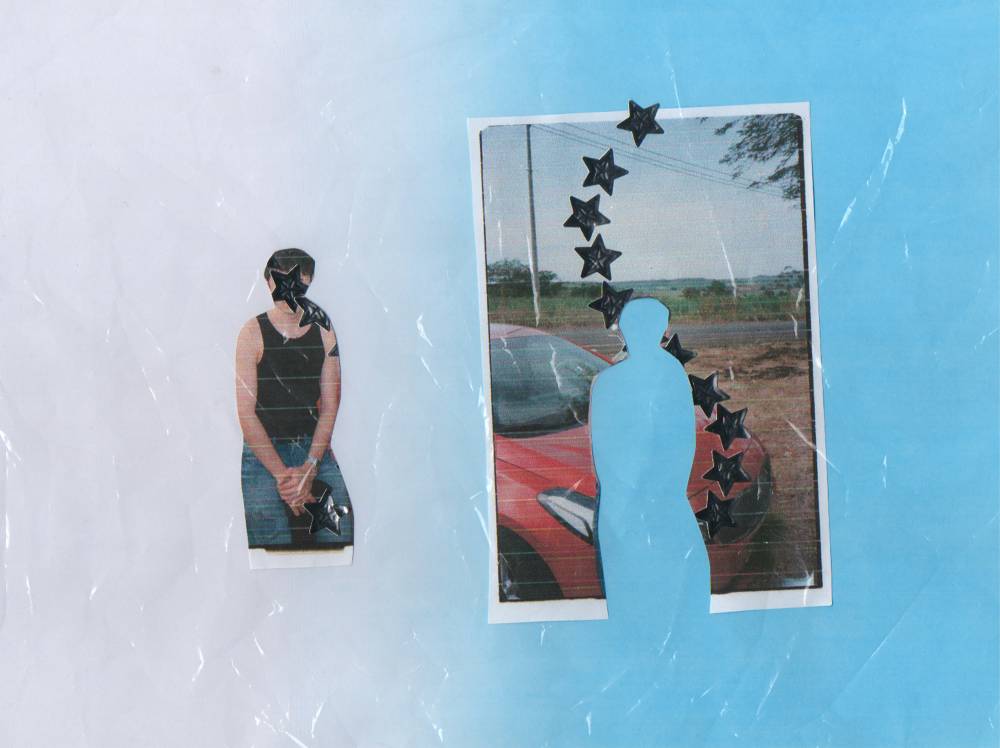
I ran into a socialite tita family friend at a posh mall recently.” The usual Manila greetings followed: beso-beso, compliments, and quick catching up. Then she said, “I’m here with my son.” I turned and saw a deeply tanned man in loose beige linen standing some paces behind his mother.
“Rafa?” I asked.
He smiled politely without making eye contact. “It’s Elian now.” For a second, I thought I misheard him.
This was—let’s hide his real identity under the name “Rafael Antonio”—my teenage crush. Educated abroad, old money, tall, moreno, athletic, and gracious, he carried himself with unmistakable sprezzatura. It had been more than a year since I last saw him socially.
Back then, Rafa was figuring out midlife transition, his LinkedIn changing every few months: startup founder, investor, sustainability advocate, wellness entrepreneur. There were so many “co-founded” ventures that nobody really knew what he actually did anymore.
Now, apparently, he was Elian.
Same same but different
The name sounded vaguely spiritual, vaguely expensive—perfect for someone who drinks chlorophyll water, owns handmade ceramics, and says things like, “I’m learning to detach from inherited narratives and live more intentionally within my authentic frequency.”
Okay. But Rafa was now so lean he looked almost emaciated. His demeanor had become reserved, his once luscious black locks flat, and the vivaciousness in his eyes noticeably dimmed.
His mother still called him Rafa. “Rafa just got back from Bali,” she explained. Of course he did.
At first, the whole thing felt a little funny in the specific way upper-class Manila reinventions often are. Wealthy Filipinos have become extraordinarily good at rebranding themselves; some people renovate vacation homes, others renovate their personalities.
The new version usually arrives in ethically sourced natural textiles, softer speaking voices, and a sudden tendency to passionately promote wellness retreats and enclaves in exotic places to a select, equally attractive, rich, and lost crowd.
But I felt unsettled that night after meeting Elian.
Healthy community or religious group?
“Is he part of a cult?” a friend asked me over coffee later.
I instinctively rejected the idea. Not cosmopolitan, well-read, smart Rafa. But the clues were there: the emotional distance, the rehearsed language, the detachment from his former identity, and the complete shift in his personality.
The truth is, we should probably stop assuming cult psychology only exists in documentaries about isolated compounds or fringe religious groups. Experts in sociology and psychology have long pointed out that high-control environments focus less on specific theology and far more on methods of behavioral, informational, and emotional control.
READ: Misconceptions about Indigenous psychology
This does not mean every close-knit community, religious organization, wellness space, or political movement is automatically cultic. Healthy communities provide support, accountability, and belonging without coercion.
But high-control environments often begin in entirely acceptable ways. They rarely introduce themselves as dangerous—they present themselves as healing, self-discipline, patriotism, spirituality, or life purpose. New members are made to feel uniquely seen and understood—praised, affirmed, and told they possess a special insight or emotional depth that others fail to appreciate.
High-control environments… rarely introduce themselves as dangerous—they present themselves as healing, self-discipline… or life purpose
Over time, the trap snaps shut through an insidious narrowing of the person’s world. Criticism from outsiders is reframed as “negativity” or jealousy. Family and friends who question the group are cast as obstacles to growth. Outside relationships slowly wither, while emotional dependence on the community deepens.
An “us-versus-them” insider dynamic
The Philippines is primed for the conditions that make these environments appealing. Daily life here can feel grueling and disorienting. Economic inequality remains severe, public trust in institutions is fragile, and many Filipinos feel emotionally unsupported, politically frustrated, or simply fatigued by daily survival.
The philosopher Martha Nussbaum once argued that human dignity depends on certain central capabilities: bodily safety, emotional attachment, practical reason, affiliation, political participation, and meaningful control over one’s environment and future.
When people work endlessly yet remain economically insecure, when families are fragmented by migration, and when political discourse becomes hostile and personality-driven, many Filipinos struggle to consistently access these capabilities.
In environments like these, communities that offer absolute certainty and a sense of belonging become powerful, stabilizing forces. For some, that certainty comes through strict religious environments providing routine and moral definitiveness. For others, it comes through political movements built around a zealous, “us-versus-them” insider dynamic.
But we just want to belong somewhere
We laugh at rich people flying to Tulum, Sedona, or Koh Phangan to “find themselves,” just as we laugh at boomers forwarding AI-generated fake news, or online mobs defending political personalities with near-religious devotion.
But beneath the changing aesthetics, the underlying human longing is identical: to belong, to feel chosen, to feel protected, and to feel certain.
No one is completely exempt from this vulnerability. Intelligence does not automatically protect people from emotional dependency, coercion, or manipulation. It is naive and arrogant to assume that only the spiritually weak or uneducated fall into high-control groups.
In fact, some of the most aggressive defenders of these spaces are deeply emotionally invested, highly educated members who genuinely believe they are protecting something sacred.
We see this in political fandoms, religious extremism, online ideological spaces, intense K-pop stans, and self-improvement communities. Often, the most passionate enforcers are women who defend the group’s worldview because the community has become central to their own emotional security and identity.
READ: ‘Obsession’ and a wish for better pay
When you start to lose yourself
Things become dangerous when disagreement is forbidden, criticism is treated as a personal attack, and people slowly lose the ability to exist outside the totalistic environment they entered.
The telltale signs follow a predictable script: severing ties with family, developing an insulated version of the truth, and treating honest disagreement as betrayal. Horrifyingly, people who once described themselves as peaceful begin rationalizing cruelty or openly expressing hostility toward anyone perceived as attacking the group or its leader.

The telltale signs follow a predictable script: severing ties with family, developing an insulated version of the truth, and treating honest disagreement as betrayal
Whether these spaces exploit their followers financially, emotionally, or psychologically, the ultimate theft is the same: they isolate individuals from everyone who once grounded them in reality. The frightening part is not how extreme the transformation looks, but how harmless it appears in the beginning.
That is why meeting Elian unsettled me.
Beneath the reinvention was something recognizable: a human being searching for meaning and identity in a world where many people no longer know where to find either.
And things like this remain amusing only until someone we love starts disappearing into them piece by piece.