Nobody told me wine belonged on my face. That’s something I did not expect to learn in my late twenties: the same compound that researchers used to explain why French people could eat their body weight in cheese and still have functioning hearts is now sitting on my nightstand in a burgundy bottle, doing something genuinely useful for my skin.
The compound is resveratrol. The brand is Laviejo, a Japanese skincare brand now in the Philippines through Dr. Pia Mendiola. The name loosely translates from Spanish and Italian as “the old” or “the aged,” which in an industry that names everything Glow, Youth, and Renew, is either very brave or very sure of itself.
But after looking into the science, I think it is the latter.
What wine has to do with your skin cells
In the 1990s, scientists were trying to solve a puzzle. French people were eating diets that should, statistically, have been devastating for cardiovascular health. Butter, cream, cheese, the works. And yet their rates of heart disease were significantly lower than expected. Red wine kept appearing as a variable, which, as a non-drinker, I found deeply unfair.
Resveratrol, a polyphenol antioxidant found in grape skin, kept appearing as part of the answer.
What followed was decades of research that moved well beyond the heart and into territory that is directly relevant to everyone, ignoring their sun spots.
In skin, resveratrol neutralizes free radicals. These are unstable molecules produced by UV exposure, pollution, and daily oxidative stress that damage cells and accelerate every visible sign of aging you would prefer to delay. It also activates fibroblast cells, which produce collagen, the structural protein keeping your skin firm before it gradually decides to stop doing that.
In skin, resveratrol neutralizes free radicals. These are unstable molecules produced by UV exposure, pollution, and daily oxidative stress
READ: How Gen Z relates to alcohol now
Research published in the Journal of Investigative Dermatology documented its ability to protect against UV-induced cellular damage at a level most antioxidants do not reach.
Then there are sirtuins. These are proteins that regulate cellular longevity, DNA repair, and how your cells handle stress at a molecular level. SIRT1 specifically governs genomic stability and inflammatory response. Longevity researchers were writing serious papers about sirtuin activation long before beauty brands noticed.
Resveratrol activates these pathways. Which means it is not just addressing how your skin looks today. It supports the biological mechanisms that determine how your skin ages over the next decade. That is a completely different category of work from what most serums are doing.
For hyperpigmentation specifically, resveratrol inhibits tyrosinase, the enzyme that triggers melanin production. It does not fade a mark after it has formed. It intervenes before the pigment is produced. That upstream approach is what separates it from most brightening ingredients, which arrive after the damage has already settled in like an uninvited houseguest and try their best.
I have sun spots on my right cheek and left jaw that I unhappily collected throughout university. They are positioned at exactly the angle where my contour ends, which means on low concealer days, I look less like someone with hyperpigmentation and more like someone who got distracted mid-makeup and forgot to blend things properly. The upstream approach is exactly what that history needs.
How Laviejo actually delivers it
The system works through a couple of products used in sequence. And I only got my hands on two of the most important, in my opinion: First, the lotion, then the essence, and the names mean something specific here.
In Japanese skincare, a lotion is not a moisturizer. It is a liquid toner applied immediately after cleansing, pressed into skin to soften its surface and prepare it to absorb everything that follows. The essence comes next, lighter than a serum but concentrated enough to carry active ingredients deep into skin that the lotion has already opened up. Each step amplifies the next. The resveratrol does not sit on the surface but actually gets in.
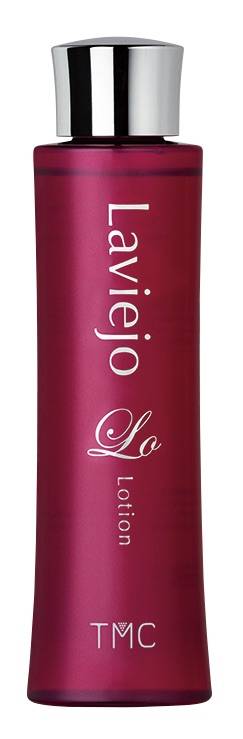
These two products currently live on my nightstand because I wouldn’t want to forget to apply them before I knock out for the day. After over a week of use, my skin has felt consistently hydrated without heaviness, which for combination skin is genuinely not always guaranteed. One week is an observation, not a verdict.
What added weight to my patience was the women at the Philippine launch who have been using it longer, among them designer Andrea Tetangco, whose skin is absolutely gorgeous. She vouched for it. The before and after results from longer-term users made waiting feel less like a delay and more like trusting a process that has actual science behind it.
Now, about the aloe
YOU Beauty’s Sunbrella 50% Aloe-B5 Acne Shield Light Sunscreen arrived, and the first thing I noticed was that aloe barbadensis leaf water is not just in the formula. It’s 50 percent of it. The base of this sunscreen is not water. It is aloe. Which sounds like something you would expect from a face mask or a soothing gel after a sunburn, not from a daily SPF 50+ PA++++ sunscreen designed for oily and acne-prone skin in tropical heat.
But that is exactly the point. YOU Beauty builds on a premise that more brands should start with: that skin in Southeast Asia has specific needs, and that most globally distributed formulations were developed in temperate climates that share nothing with Manila in July. Humidity, UV intensity, and the way combination skin behaves in 35-degree weather require a different starting point entirely.
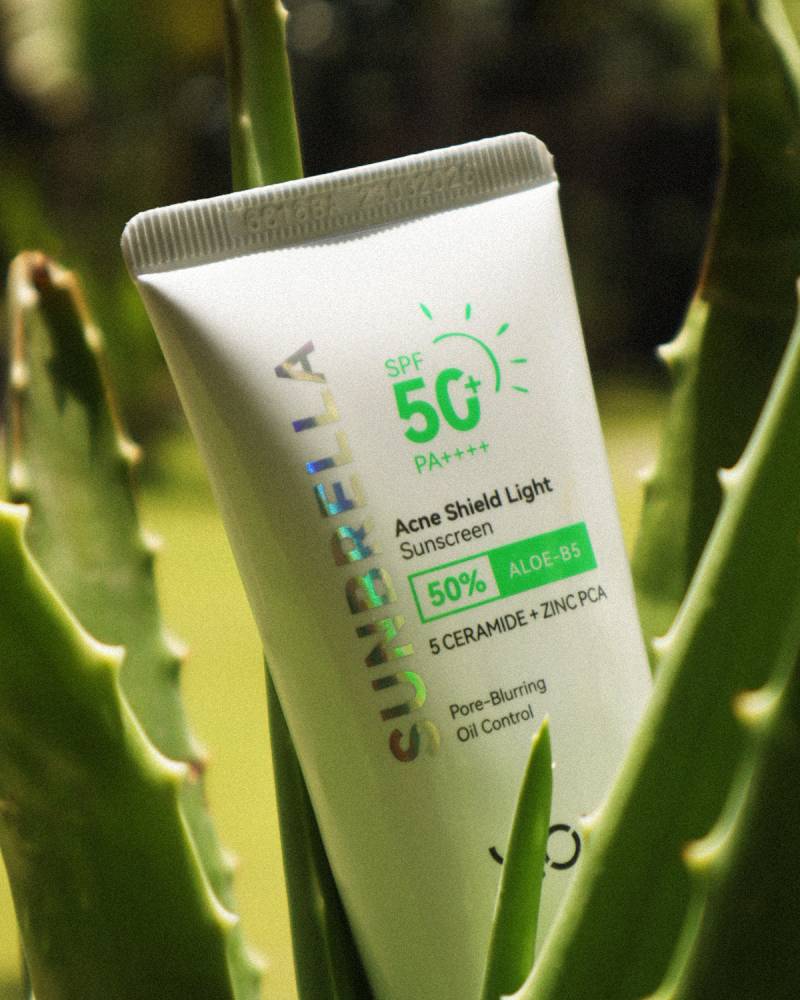
Aloe at that concentration brings documented anti-inflammatory and barrier-soothing properties that are functional rather than cosmetic. Panthenol draws moisture into the skin and holds it. B-Ceramide rebuilds the lipid barrier that retinoids, AHAs, and BHAs strip every time you use them. Zinc PCA controls oil without triggering the rebound sebum production that over-stripping causes, which is the cycle that makes acne-prone skin worse while you are actively trying to help it.The formula wears matte through Manila heat, sits under makeup without disturbing it, and makes reapplication something you will actually do rather than skip because you are worried about your base.
READ: Beauty products worth leaving on display
The actual point
Laviejo and YOU Beauty are not solving the same problem. One works at the level of cellular aging and long-term skin biology. The other works at the level of tropical skin that needs protection built for the climate we have here in the Philippines. What they share is a starting point: understanding how skin functions before deciding what to put on it.
The wine your skin drinks works at the cellular level, activating repair mechanisms most serums never touch. The aloe you do not eat works at the barrier level, respecting the skin’s own biology instead of overriding it.