Chele Gonzalez, Rodrigo Osorio, and Irene Fernandez are playing the long game—and they are doing it through an enriching customer journey seen, felt, and tasted in the distinct yet cohesive spaces of their one Michelin star restaurant.
An unexpected lounge in the middle of a small lagoon is an unlikely symbol of progress. Part lounge, part mini gallery, and part pseudo-planetarium, the area serves as the initial touchpoint of the new Asador Alfonso experience, complete with a local vermouth, a smoky boquerones tapa, a multicolored metal tree from Carlo Calma, and a projector playing clips of the property on an endless loop.

Upstairs is another welcoming area anchored by a skylight in the middle of the steel dome, framing the sky as an art installation before diving into the new fine dining experience on the second level of The Lava Rock, the main dining hall.
Erected several meters away is another lounge. This one is more intimate but also more conventional, letting guests congregate in an atmosphere that mirrors the rebranded Alfonso Roasting Room occupying the first floor.

Gonzalez says the rebranding and demarcation of Asador Alfonso arose from several observations, specifically from the broad customer base the restaurant attracts.“We realized we were hosting two very different kinds of guests,” says the chef patron and co-owner. “Some were looking for quiet and focus. Others came with families, kids, and a lot of energy. Trying to force both into the same room didn’t work for anyone.”
The struggle for identity

It was difficult at the beginning, admits Gonzalez. A diverse consumer demographic with varying expectations is a common challenge many restaurants face. “We had a lot of complaints. People came here with very high expectations,” he explains.
These expectations were shaped by perceptions of an upscale dining experience, perhaps partly driven by the unique architecture and certain guests arriving by helicopter at the real estate.
“We realized we were hosting two very different kinds of guests,” says Chele Gonzalez “Some were looking for quiet and focus. Others came with families, kids, and a lot of energy. Trying to force both into the same room didn’t work for anyone”
The chief grievance was the premium price point of the sharing menu, but Gonzalez, Osorio, and Fernandez—overcoming stress from customer complaints—chalked it up to cultural misalignment and recalibrated their approach to offer plated five-course set menus, signaling a slow departure from their original idea of “trying to be a roasting house.”

“And we started to become a little more fine dining—not because we wanted it, but because of the demand of our clients,” says Gonzalez.
The pivot eventually led to the foundation of the Journey menu before it evolved into its current multicourse iteration. Alongside the abbreviated six-course Heritage menu, the new 10-course Journey reflects not just the metaphorical voyage Gonzalez and Osorio take you with their food but also the ride to get to the restaurant’s final form—for now.


It took some time, but Gonzalez has finally put to bed the confusion customers experienced as well as the unintentional brand dilution that came in its wake. Their other equally important goal now is to get a stronger sense of Alfonso through its two jewels. But even though the concepts are split, Spanish gastronomy remains the constant narrative in the kitchens.
Sibling spaces

Today, Asador Alfonso is the well-run, high-end restaurant it has evolved into, while Alfonso Roasting Room keeps the rituals of roasting alive and well.
On such fertile grounds, the key element here is the absence of friction. The duality of the two venues flows seamlessly, balancing elevated Spanish cuisine and lively à la carte experiences. “When guests know exactly what they’re booking, the experience improves before they even arrive,” says Gonzalez.
Today, Asador Alfonso is the well-run, high-end restaurant it has evolved into, while Alfonso Roasting Room keeps the rituals of roasting alive and well
Lamb and cochinillo from Segovia are the only products allocated between the two restaurants—though the preparation and presentation are different. Downstairs in the sweeping yet still cozy room, an 8,000-kilo Maestro roasting oven remains the heart of Alfonso Roasting Room alongside staple ingredients such as the carabinero and vegetables.
“My main goal [with Alfonso Roasting Room] was to really try to be Spanish gastronomy in a real, different way,” Gonzalez says. “And today, the way you eat is like eating in Spain.”
Casual, yes, but with an intense reverence for tradition.
The Alfonso Roasting Room’s menu is populated by familiar favorites that surpass expectations yet retain traditional Spanish integrity
The Alfonso Roasting Room’s menu is populated by familiar favorites that surpass expectations yet retain traditional Spanish integrity—there’s a great Manchego croqueta, perfectly grilled pulpo with cauliflower puree, and a roasted vegetable dish called escalivada with goat cheese, almond, and romesco sauce that’s smoky, sweet, and earthy all the same time.

A beautiful white bean stew cooked in a wood oven at low temperature gets a marisco makeover, with Gonzalez utilizing prawns instead of smoked and cured meats typical of fabadas. The slight tweak is superb and still makes sense.

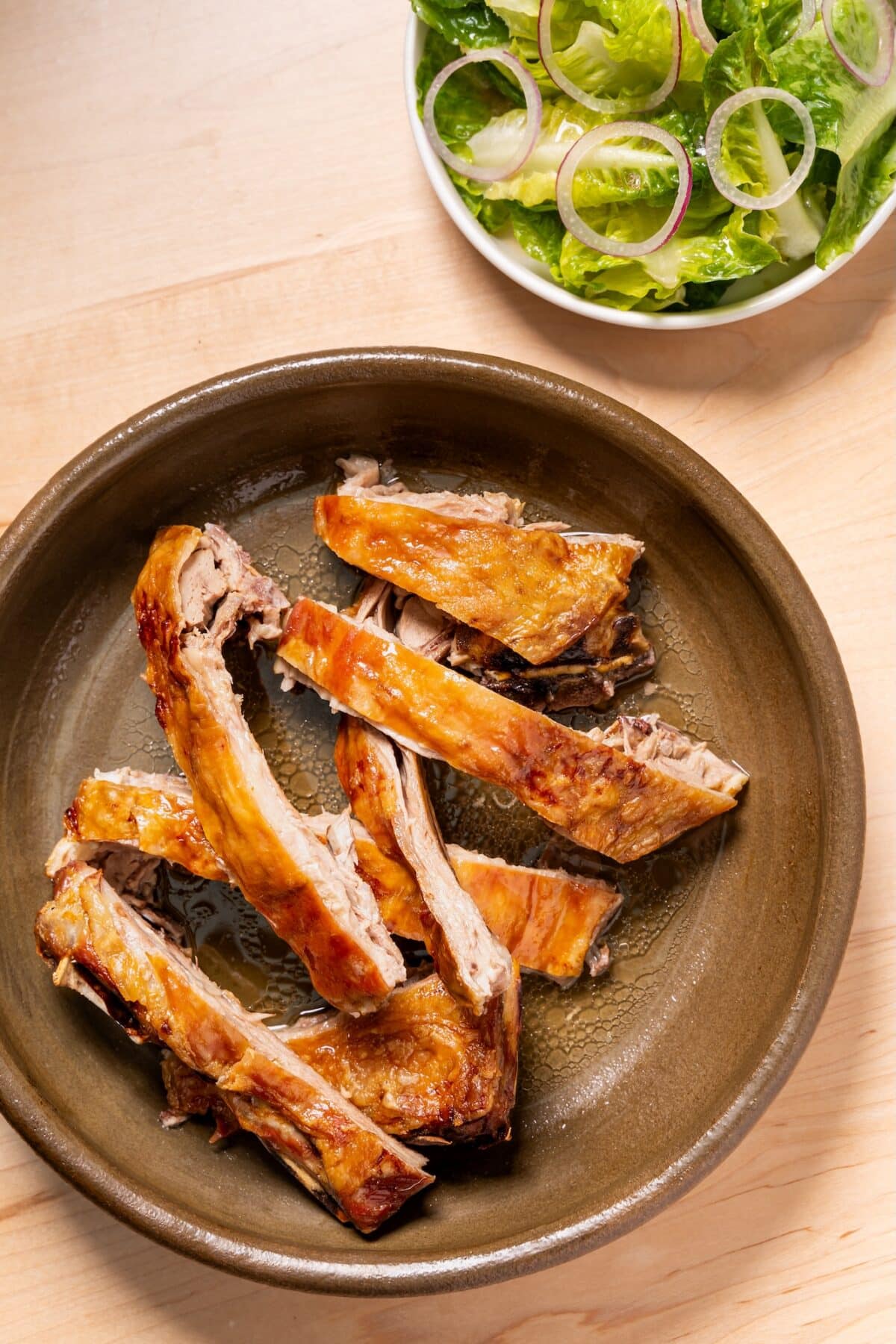
Those with a deep yearning for more robust, heartier plates should consider the rabo de vaca, where the boneless oxtail cooked in red wine and served with porcini sauce is given room to shine. Or the slow-roasted star: the Segovia suckling pig that tastes almost exactly as you’d expect it at the Castilla y León ciudad.
Fine zone

And then there is the new Asador Alfonso, an intimate space overlooking the pool and pasture, seducing guests with its geometric frenzy and plates that emotionally connect with palates.
“These aren’t traditional tasting menus,” says Gonzalez. “They’re structured experiences. The pacing matters. The progression matters.”
And then there is the new Asador Alfonso, an intimate space overlooking the pool and pasture, seducing guests with its geometric frenzy and plates that emotionally connect with palates
Indeed, the fine dining experience he espouses in Asador Alfonso is unhurried, dreamy even, in the acoustically hushed room with Gonzalez and Osorio taking pleasure in crafting produce-driven courses in the new open kitchen, and Fernandez keeping service slick but with a softness and care that come from dedication.

And if anything, Gonzalez’s Journey menu shows that he’s far from being a one-trick pony. Asador Alfonso’s identifiable differentiator from Gallery by Chele is that it exhibits inherited dynamism, progressing from one Spanish tradition to another without being predictably standard.
The Cangrejo, under a blanket of ikura and potato mousse, is a simple but powerful course that stands out on its own. Homemade sourdough bread, cured A5 Japanese wagyu, and a Jamón Ibérico croqueta also burst with purist flavors, alongside his Verdura de Temporada, a textural, vegetal dish of artichoke, leeks, and fennel that gets extra oomph from a wonderful celeriac toffee puree.

Gonzalez also plays with ingredients in interesting ways, such as Gallagher oysters in chicken and mushroom escabeche served with pork trotter cracker, or a lip-smacking glazed veal sweetbread flourished with creamy egg yolk.
Signature plates, showstopping flavors
The final leg of the Journey sees Gonzalez and Osorio commit to more signature plates. Mediterranean gamba roja rice in a clay pot, tender cochinillo with confit potato, gorgeously roasted lechazo with some greens from their farm, and a pineapple dessert done in different textures—all of which nod to the upholding of the ingredients themselves as the main showpiece.

The Lenguado, however, is a celebration of luxury and ease. It’s deceptively simple but a symbol of the kind of work they do at the renewed Asador Alfonso—perfectly cooked sole (sous-vide first before roasting), then glossed in a glorious collagen emulsion that, Osorio explains, is made in a very traditional way.

“What we do is we clean the fish, we get the heads and confit them in olive oil with red chili, garlic, a little white wine, lemon juice, and with the bones, we do a fish stock,” says Osorio. “On one side, we get the collagen, and on the other side, we get the flesh. When we have the two, we emulsify it.”

It’s this kind of quality-first approach and respect for tradition and ingredients that defines the experience guests will remember long after leaving Alfonso. And this is the product of a strong leader in Gonzalez, a passionate patron galvanized by years of perseverance and who never rests on his laurels.“The place needs to evolve and grow,” he says, clarifying that the transformation is still ongoing. “The fourth floor can be a beautiful cellar, I see us doing farm-to-table, a lot of things happening here.”“And I also see myself spending more time here,” muses Gonzalez, hinting at settling down in the countryside and watching all his hard work pay off in the comfort of his home.