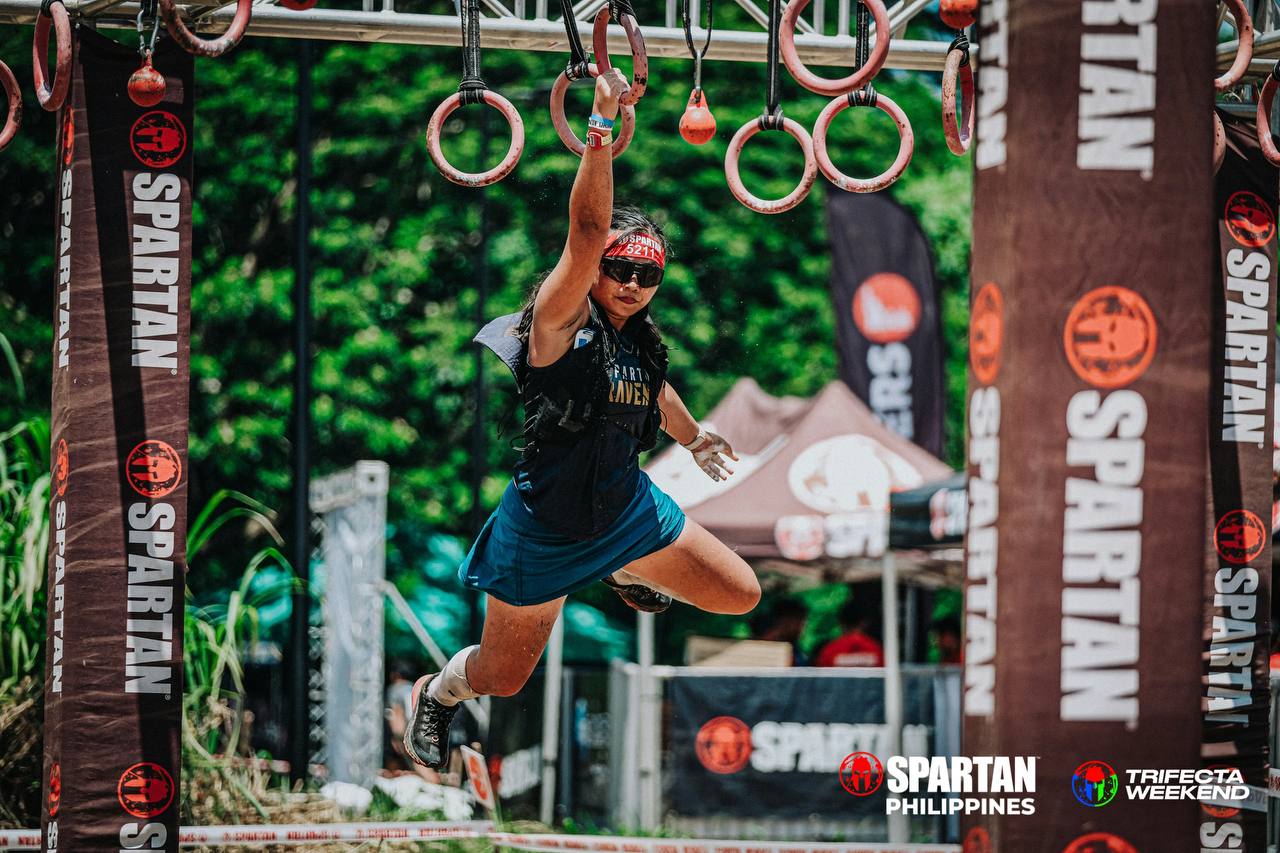
As a runner who frequently trains in Bridgetowne, Pasig City, I cannot help but notice the obstacle course across the Atleta63 Football Field. At first, I thought it was an elaborate outdoor playground for adults without any clear indication as to what it’s for.
It wasn’t until I got to meet Kai Velasquez, a Spartan racer since 2024, that I got to learn more about Spartan Racing. She showed me the ropes of Spartan Racing and even shared tips based on her own experiences.

She started out like many other beginners typically would. She wanted to try something new, she was curious about it, and she joined for fun. But joining a Spartan Race isn’t just about fun and games.
What is a Spartan Race?
Velasquez defines a Spartan Race as “a mix of trail running and obstacles laid out on a marked course.” The goal is to complete said course and try to finish all the obstacles along the way.
For her, it is one of the most physically and mentally demanding races you can do. On top of running, you constantly deal with obstacles that test your strength, endurance, grit, and mindset.
Kai Velasquez defines a Spartan Race as “a mix of trail running and obstacles laid out on a marked course.” The goal is to complete said course and try to finish all the obstacles along the way
“Some obstacle placements may change per event, but the structure and rules stay consistent worldwide,” she says.
There are three different categories: Open, Age Group, and Elite. The Open category is beginner-friendly, where people run mainly for experience and enjoyment at a more relaxed pace. The Age Group and Elite categories, on the other hand, are for more competitive athletes who are focused on timing, rankings, and podium placement. Despite the different categories, everyone runs the same course and follows the same rules.

In Velasquez’s experience, she started by joining Open Races, where the goal was to challenge yourself, enjoy the experience, and just finish the course. It was only eventually that she realized she enjoyed the competitive side of Spartan Racing and started joining the Age Group category to aim for podium finishes.
Training for the Spartan Race
According to Velasquez, who is a Spartan brand ambassador, her usual training is built around three main things: running, strength, and obstacle work.
“Running is my main focus for cardio and endurance, and I usually do that around three to four times a week,” she notes. “That helps build the stamina you need for the constant run-obstacle transitions during a race.”
“Running is my main focus for cardio and endurance, and I usually do that around three to four times a week”
Velasquez adds, “On top of that, I do strength and conditioning about two to three times a week to build overall strength, grip, and functional power for obstacles.”
On some weekends, depending on her schedule, Velasquez does sessions specific to obstacle course racing (OCR) or race simulations. She says she does so to practice techniques and get used to race conditions.
Balancing training with a full-time job

When it comes to the challenges of Spartan Racing, Velasquez admits that finding the balance between a full-time job and Spartan training is the first real challenge. After a full day of work, pushing yourself to train despite being tired is the most difficult part.
However, through time, it becomes part of the routine. “Training slowly became something I actually look forward to instead of something I had to force myself to do.”
“Training slowly became something I actually look forward to instead of something I had to force myself to do”
Velasquez points out that having a coach, such as RB Mercader, plays a big role in keeping athletes consistent, especially on days they might feel lazy or drained.
After all, there will be times when athletes will have to make sacrifices: cutting back on after-work hangouts and other hobbies, just to stay focused and consistent with training.
Mistakes to avoid as a newbie

There are a lot of things going on in a Spartan Race that it becomes easy to be overwhelmed or to focus on one thing and neglect the other. The latter ended up being a lesson that Velasquez had to learn as a newbie.
“One of my biggest mistakes was not properly training enough for running and focusing too much on OCR-specific movements,” Velasquez admits. “In reality, Spartan is very run-heavy, especially trail running. Without proper running preparation, it really becomes a struggle and increases the risk of mistakes or injury.”
“One of my biggest mistakes was not properly training enough for running and focusing too much on OCR-specific movements”
She also mentions that she did not realize that gear is actually something very personal. More than what is “good” or expensive, you should prioritize what works for your body and movement. She learned the hard way when she bought shoes that did not suit her properly, which caused pain that affected her performance.
To bounce back from these mistakes, Velasquez highlights the importance of knowing how to adjust. When it comes to her training, she adjusted her approach by prioritizing running more for training while still keeping OCR work in the mix.

As for her gear, she says, “I took more time testing different gear and making sure I only used what truly worked for me instead of just copying what others were using.”
Fitness aside, how is Spartan Racing beneficial?
Being part of a Spartan Race is a good way of keeping fit. But more than just fitness, Spartan Race brings other positives into the lives of its participants. In particular, the grueling, intense training and race days have fostered strong bonds among the racers and coaches.
“Beyond fitness, one of the biggest things I gained from Spartan is the community,” Velasquez shares. “I’m really thankful for the Spartan Ravens and the training environment because that is where I met people who share the same mindset and passion. It also helped me build genuine friendships along the way.”
“Beyond fitness, one of the biggest things I gained from Spartan is the community”
“What stands out is the unique bond that happens through shared struggle,” she adds. “Training and racing together, especially going through tough sessions, creates a kind of connection that’s hard to explain. You really bond through the suffering and the experience itself.”
Lessons learned from experience
For Velasquez, her biggest advice to anyone who wants to try Spartan Racing out is simple: just show up.
“The hardest part is really starting. Everyone is bad at it in the beginning, and that’s completely normal,” she stresses. “I started the same way, just curious, and improved over time as I kept showing up.”

And for first-time racers, Velasquez reminds them to just focus on themselves instead of being too fixated on winning or comparing their performance with other people.
“Enjoy the experience, take it one obstacle at a time, and just see what you’re capable of,” she advises. “For me, it can even become a form of self-discovery, almost like therapy through movement and challenge.”
Spartan Race gear essentials
Whether you’re starting out or a seasoned veteran, do not run a Spartan Race without these essentials:
Tops and bottoms: Compression tops and bottoms are suitable for the Spartan Race. Moisture-wicking shirts, like those made from polyester, and lightweight shorts are ideal. No cotton!
Running socks: Similar to the rest of the outfit, avoid wearing cotton socks.
Trail running shoes: Choose shoes that suit your feet and your needs.

Sunblock: Apply this before the race and, if preferred, bring a small bottle you’re willing to carry all the way.
Water bottle or hydration vest: Hydration is key during the race.
Towel: A post-race essential because you’ll be sweating a lot.
Sunglasses and/or hat (optional): If the sun’s rays bother you a lot, this’ll help protect your eyes.
Gloves or magnesium powder (optional): It’s not a necessity, but it’ll help you avoid tearing your palms during rope climbs and carries.